AI Agent Browser Automation: A Top Product Hunt Product

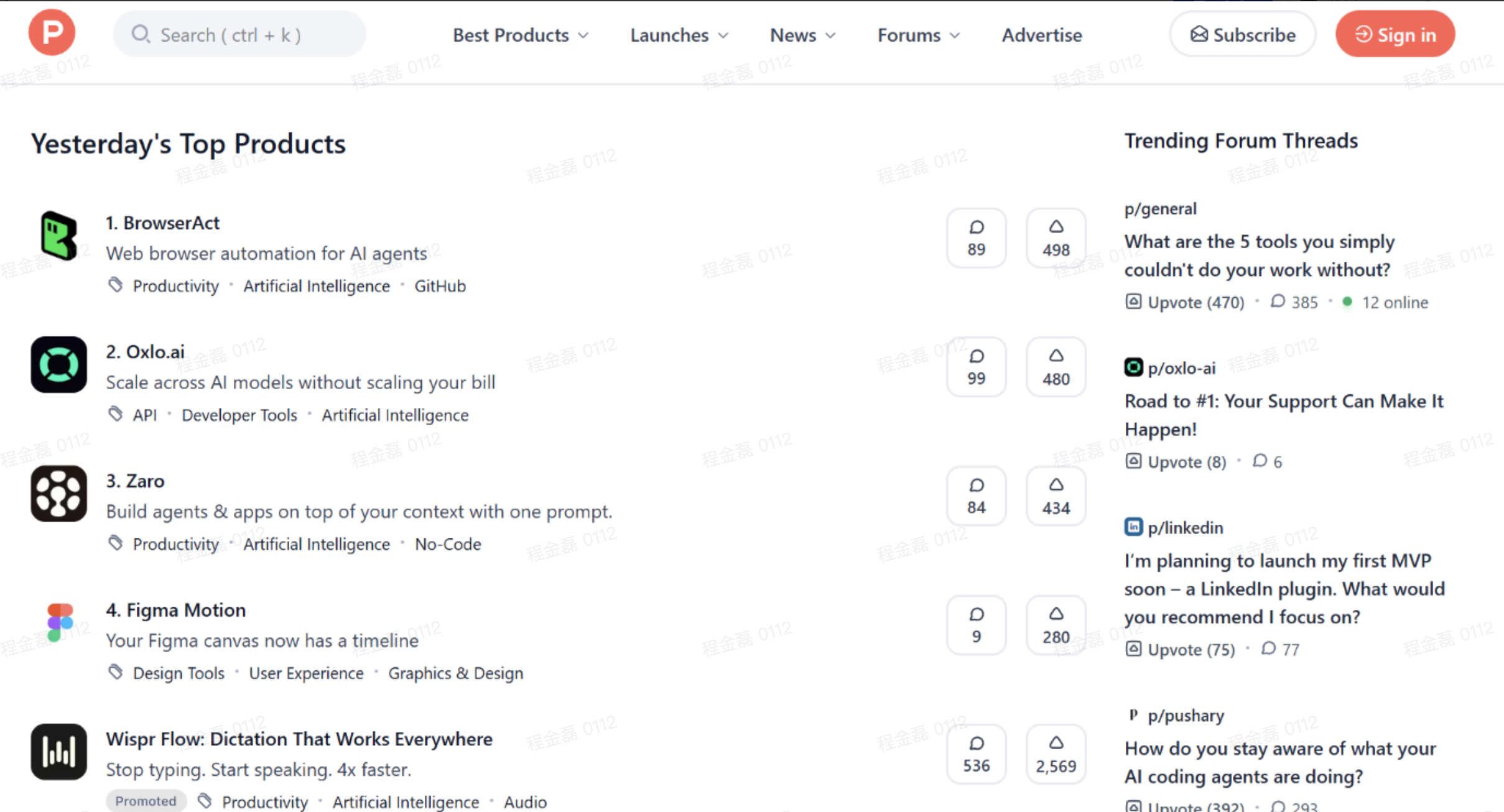
AI agent browser automation is moving from demo feature to infrastructure requirement. BrowserAct reached #1 Product of the Day on Product Hunt on June 25, 2026 and entered the weekly Top 3, making it a top Product Hunt product for builders who need agents to finish work inside real websites. The hard edge is becoming obvious: agents can reason through a task, but still fail when the task has to finish inside a real, logged-in, changing website.
- 1BrowserAct became a top Product Hunt product because the market is shifting from agent reasoning to agent execution. Builders care less about clean demos and more about whether agents can finish work inside real websites.
- 2The real web breaks agent workflows through session expiry, verification, dynamic UI changes, uploads, and manual approval steps. BrowserAct is designed for those stateful conditions.
- 3BrowserAct combines real browser control, session management, verification handling, remote human handoff, reusable Skills, and safety gates. That stack is the difference between a browser wrapper and production browser infrastructure.
- 4The Product Hunt top product response validates a deeper buyer signal. AI agent teams need workflows that can pause for a human, preserve browser state, and resume without starting over.
BrowserAct Became a Top Product Hunt Product Because Execution Is the Bottleneck
BrowserAct did not become a Product Hunt top product because people need another generic scraper. It resonated because builders are discovering where agent workflows actually break.
An agent may understand the user request perfectly. It may plan the right sequence of steps. It may even produce the right code. Then it reaches the live web and runs into one of the boring, costly problems teams deal with every day:
- The login session expired.
- A verification prompt appeared.
- The page changed after the agent inspected it.
- A file upload or form confirmation required manual approval.
- The browser state could not be reused across runs.
That is the last mile of AI agent browser automation. It is not glamorous, but it decides whether a workflow finishes.
The BrowserAct Product Hunt page describes the product as "web browser automation for AI agents." The stronger signal behind this top Product Hunt product moment is in the conversation around it: builders are not only asking for page control. They are asking for browser state, recovery paths, and human-in-the-loop execution.
Why BrowserAct Is Not Just a Browser Wrapper
Browser wrappers usually help an agent open a page, click a selector, and extract text. That is useful, but it does not solve the operational parts of real websites.
BrowserAct is built around a broader execution layer:
This is why the BrowserAct stack combines real browser control, session management, verification handling, remote handoff, reusable Skills, and safety gates. The point is not to make every website magically easy. The point is to keep the workflow moving when the website behaves like the real web.
🎯 CTA: If your agent keeps failing after login, verification, or manual approval, test the workflow with BrowserAct before rebuilding the whole automation stack.
The Market Is Moving From Reasoning to Completion
For the last two years, most AI agent demos have been judged by whether the agent could plan, write, and explain. That is no longer enough.
Teams now ask a more practical question: can the agent complete the job in the environment where the job actually happens?
For web workflows, that environment is messy and stateful. It includes dashboards, marketplaces, social platforms, CMS tools, internal admin panels, SaaS products, and customer accounts. These are not static pages. They contain authentication boundaries, UI drift, anti-abuse systems, permission checks, and occasional human decisions.
That is where a real browser layer matters. BrowserAct gives agents a way to browse, click, type, upload, extract, screenshot, and continue across changing web conditions. For developer teams, the browser-act Skill provides the execution runtime; the browser-act-skill-forge project helps package repeatable website workflows into reusable Skills.
Give your agent a real browser, then turn the workflow into a Skill.
- 1. Use browser-act when an agent needs to open, click, scroll, extract, or inspect a live site.
- 2. Use browser-act-skill-forge when the workflow should become reusable across runs and agents.
- 3. Keep the operational boundary simple: automate what the user can already do in the browser.
Human Handoff Is a Feature, Not a Failure
Many automation systems treat human intervention as an error state. BrowserAct treats it as part of the workflow.
That distinction matters. In real business processes, some steps should require a person:
- Logging into a protected account.
- Passing verification.
- Approving a payment or submission.
- Confirming that extracted data is correct.
- Handling a step where policy requires human judgment.
Without handoff, the agent either fails or tries to continue in a way that the user would not trust. With handoff, the person can step into the exact live browser session, complete the required action, and let the agent resume from the same state.
That is a more realistic model for AI agent browser automation: automate what can be automated, ask for help when the browser flow requires a person, then continue without losing context.
Reusable Skills Turn One Launch Moment Into Infrastructure
The Product Hunt launch was a visibility moment. Becoming a weekly Top 3 Product Hunt product was useful proof, but the infrastructure story is bigger.
BrowserAct is built around two complementary layers:
browser-act: the execution runtime for controlling real browsers, handling navigation, interaction, uploads, screenshots, extraction, and verification-aware workflows.browser-act-skill-forge: the reuse layer that turns a working website workflow into a reusable Skill.
Together, those layers help teams move from one-off browser automation to repeatable agent workflows. A developer can prove a flow once, package it, and let future agents call it without re-discovering the same website path every time.
For teams that need ready-made web data workflows, BrowserAct also connects naturally with reusable templates such as the Google Maps Scraper, the Reddit Posts & Comments Scraper, and the Twitter/X Follower Dashboard.
What This Means for Agent Builders
The BrowserAct Product Hunt response is a useful market signal: the next wave of agent browser automation tooling will be judged by completion, not only capability.
If an agent can reason but cannot keep a session alive, it is not enough.
If an agent can click but cannot recover from verification, it is not enough.
If an agent can extract data once but cannot turn the workflow into something reusable, it is not enough.
The winning browser layer for AI agents will need execution, state, recovery, reuse, and safety in one system. That is the problem BrowserAct is built around.
Two Skills, One Repeatable Browser Workflow
Start with live browser execution when the agent needs to understand a page. Move to Skill Forge when the same scraper should run again without re-exploring the site.
Run once with browser-act
Give Codex, Claude Code, Cursor, Windsurf, or another agent a real browser for rendered pages, clicks, scrolling, screenshots, DOM extraction, and network inspection.
Open browser-act SkillPackage with Skill Forge
Explore the site once, verify the extraction path, then generate a callable Skill package that other agents can reuse for batch jobs or scheduled workflows.
Open Skill ForgeRelated reading: For practical examples, implementation details, and trade-offs, continue with Codex Browser Automation: Add a Reliable Web Execution Layer.
Related reading: For practical examples, implementation details, and trade-offs, continue with GPT-5.6 Browser Automation: Real-Web Agent Guide.
Further reading: Browser tool comparisons
Frequently Asked Questions
What is AI agent browser automation?
AI agent browser automation lets an agent control a real browser to navigate websites, click, type, upload files, extract data, handle sessions, and continue workflows on live web pages.
Why did BrowserAct become a top Product Hunt product?
BrowserAct became a top Product Hunt product because builders are looking for reliable real-web execution, especially for logged-in sites, verification prompts, session continuity, and human handoff.
How is BrowserAct different from a generic scraper?
A generic scraper usually focuses on extraction. BrowserAct focuses on agent execution across real browser sessions, verification, handoff, reusable Skills, and safety gates.
Why does human handoff matter for AI agents?
Human handoff lets a person complete sensitive or blocked steps inside the same live browser session, then allows the agent to resume without losing context.
Where can developers try BrowserAct?
Developers can visit BrowserAct for the platform, explore the Product Hunt launch, or start with the browser-act GitHub Skills.


