Top 6 OpenClaw Tools Developers Are Using in 2026

Discover the 6 most popular OpenClaw ecosystem tools ranked by the community — from one-click deployers to AI agent teams and workflow automation.
Last updated: March 2025 | 7 min read
Since OpenClaw burst onto the scene, a wave of ecosystem tools has followed — deployers, plugins, hosting services, and agent frameworks have all emerged to extend its capabilities. Choosing the right OpenClaw tools from this growing catalog can feel overwhelming, especially without a structured way to compare them.
A third-party directory called OpenClaw Directory is solving exactly that problem. The site currently catalogs 39 OpenClaw-related tools across nine functional categories, complete with user ratings, feature summaries, and filtering options. This article covers the six highest-rated tools on the platform right now, explaining what each one does and who it's built for.
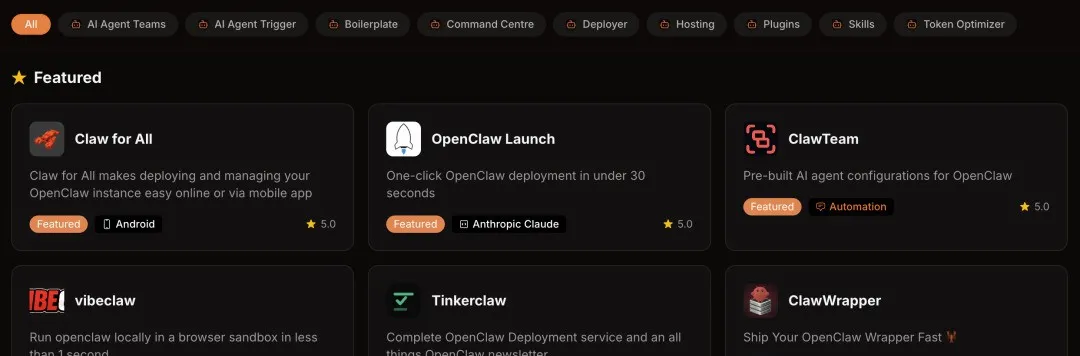
What Is the OpenClaw Directory?
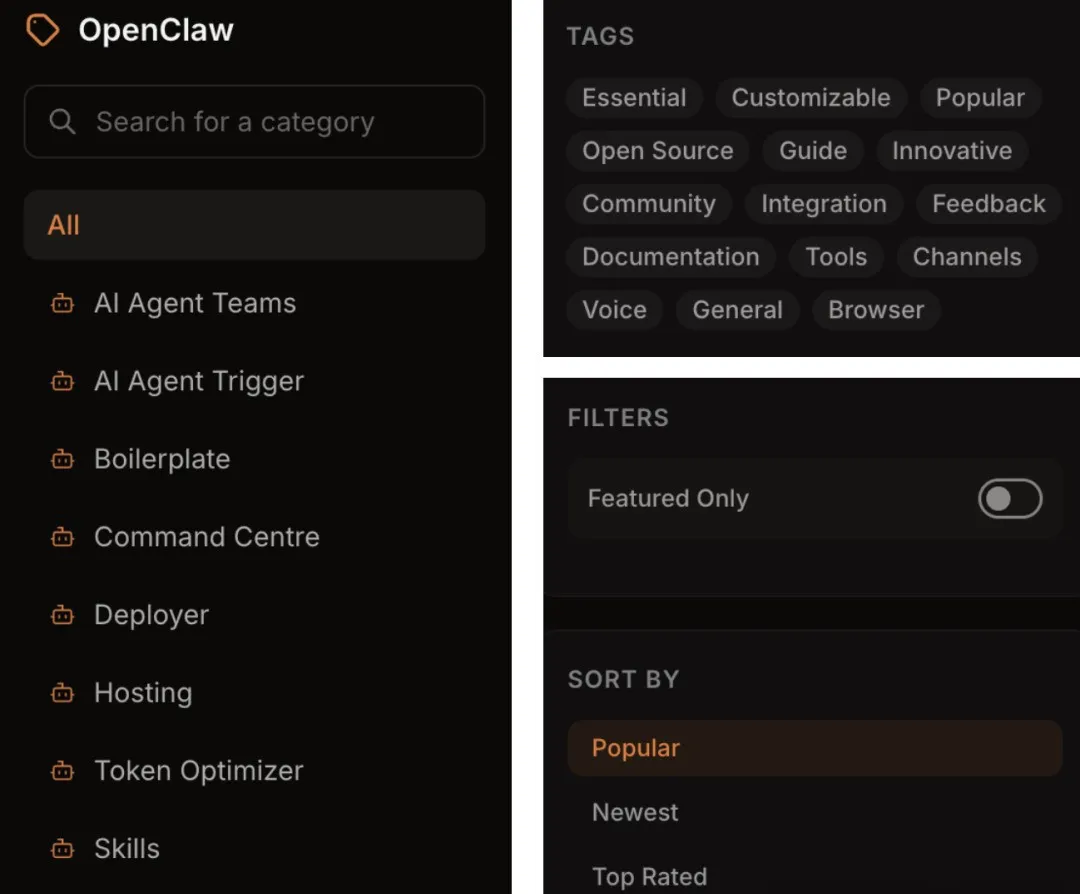
OpenClaw Directory is an independently built catalog that aggregates tools from across the OpenClaw ecosystem. Each listing is organized by category — including AI Agent Teams, Deployers, Boilerplates, Plugins, Hosting Services, Token Optimizers, and Skills — and can be filtered by tags such as "Essential," "Customizable," and "Open Source."
Users can sort tools by popularity, newest additions, highest-rated, or alphabetically. Each tool profile includes a brief description, core features, and a community rating, making it easy to assess whether a tool fits a particular use case before investing setup time.
Developers looking to automate data collection alongside their OpenClaw workflows can also explore the Amazon Bestsellers Scraper template on BrowserAct or the Google Maps Scraper — both complement agent-based pipelines that retrieve live product or location data at scale.
The 6 Most Popular OpenClaw Tools Right Now
The following tools represent the top six across all categories, ranked by overall community score on OpenClaw Directory. Each has earned its position through consistent user ratings and feature depth.
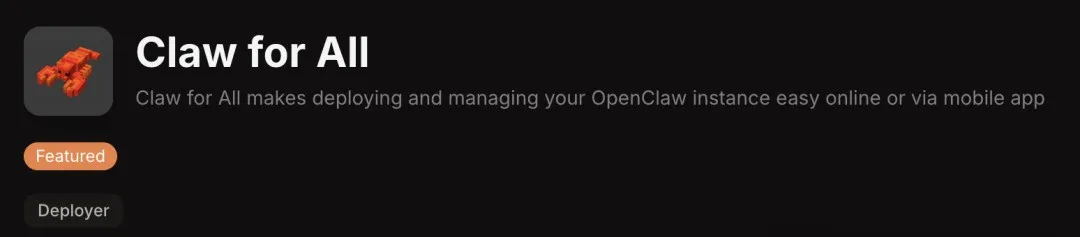
#1 — Claw for All
Category: Deployer / Hosting
Claw for All is a deployment and management platform aimed at both developers and non-technical users. It offers a web interface and a dedicated mobile application, making it possible to manage OpenClaw instances from anywhere.
- One-click deployment — launch an OpenClaw instance in a few steps without manual configuration
- Mobile management — a companion app lets users monitor and control instances remotely
- Beginner-friendly UI — a clean, intuitive layout designed for users at any technical level
- Comprehensive support resources — documentation and help channels to troubleshoot issues quickly
Its dual-access model (web + mobile) is a standout feature that few competing deployers match.
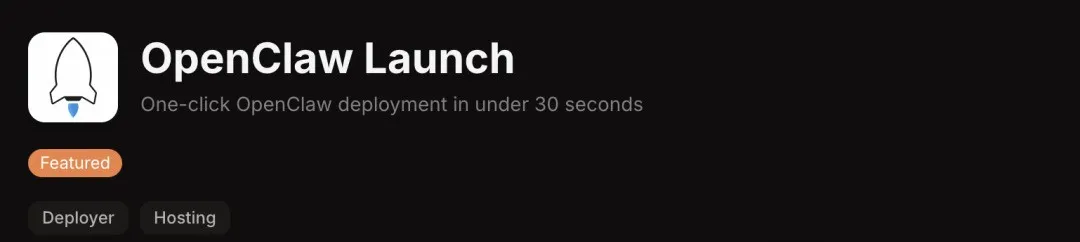
#2 — OpenClaw Launch
Category: Deployer
OpenClaw Launch focuses entirely on speed. Its headline claim — deployment within 30 seconds — targets developers who need a reliable environment spun up immediately without wrestling with configuration files.
- Sub-30-second deployment — purpose-built for rapid iteration cycles
- Minimal configuration — no complex setup required; click and go
- Stable architecture — built for reliability under consistent project loads
- Accessible UI — usable regardless of technical background
For teams running frequent deployment cycles or prototyping new agent configurations, OpenClaw Launch removes friction at the start of every iteration.
#3 — ClawTeam
Category: AI Agent Teams
ClawTeam shifts focus from deployment to agent configuration. It provides pre-built, expert-curated agent setups designed specifically for the OpenClaw platform, reducing the time required to get multi-agent workflows running.
- Pre-configured agent blueprints — expert-designed setups ready to deploy immediately
- OpenClaw-native optimization — configurations tuned specifically for OpenClaw's architecture
- Low-friction onboarding — no deep technical expertise required to run complex agent teams
- Broad applicability — suitable for enterprise teams, independent developers, and research applications
ClawTeam addresses one of the most common pain points in AI agent adoption: the gap between knowing what a multi-agent system should do and actually configuring it correctly.
#4 — Vibeclaw
Category: Deployer (Browser Sandbox)
Vibeclaw takes a different architectural approach, running OpenClaw locally inside a browser sandbox environment. It advertises startup times under one second — an unusually aggressive benchmark in this category.
- Under-one-second startup — nearly instant availability without installation overhead
- Local execution — runs on-device for improved speed and lower latency
- Isolated sandbox environment — mitigates security risks through browser-level isolation
- No technical prerequisites — accessible to users at all experience levels
The browser sandbox approach also makes Vibeclaw useful for testing agent behaviors in a controlled environment before deploying to production infrastructure.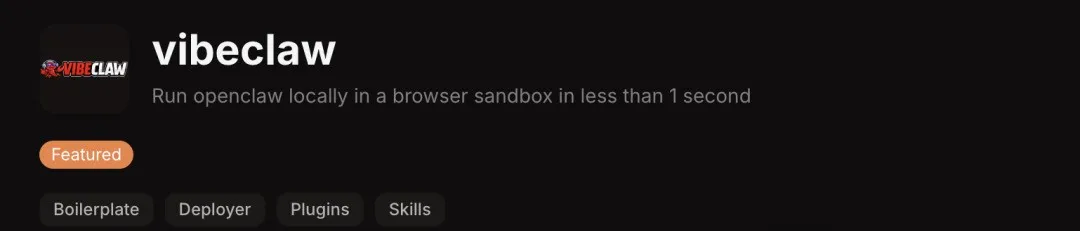
#5 — Tinkerclaw
Category: Boilerplate + Deployer
Tinkerclaw is the most feature-complete platform on this list. Positioned as an all-in-one service for founders and small teams, it combines managed deployment with workflow customization, integrations, community access, and ongoing support.
- Managed deployment in 60–90 minutes — live deployment with enterprise-grade security hardening
- Pre-built workflow templates — automations for email, reports, standup management, and inbox operations
- Native integrations — supports email, Google Calendar, Slack, and Composio out of the box
- 14-day onboarding support — hands-on guidance post-deployment with a money-back guarantee if deployment fails
- OpenClaw Manager — a desktop chat interface with visual file management, one-click skill installation, and real-time session logging
- ClawKraft community — a premium membership with live build sessions, peer feedback, and workflow sharing
- Daily newsletter — curated OpenClaw news, weekly workflow templates, and system optimization tips
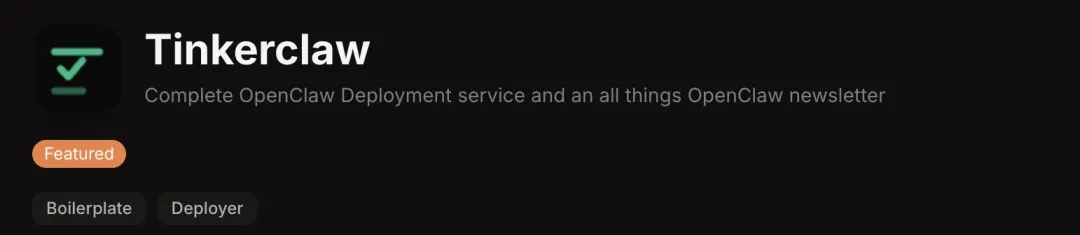
Tinkerclaw's value proposition is time savings: the platform estimates that managed deployment eliminates 12–20+ hours of manual configuration work, including Docker setup, security hardening, and environment tuning. For non-technical founders, that tradeoff is often straightforward.
Teams that also need to pull external data into their workflows may benefit from pairing Tinkerclaw with structured data sources. The Amazon Product Search API Skill on ClawhHub and the Google Maps API Skill are practical starting points for enriching agent outputs with live product or location intelligence.
#6 — ClawWrapper
Category: Packaging / Publishing
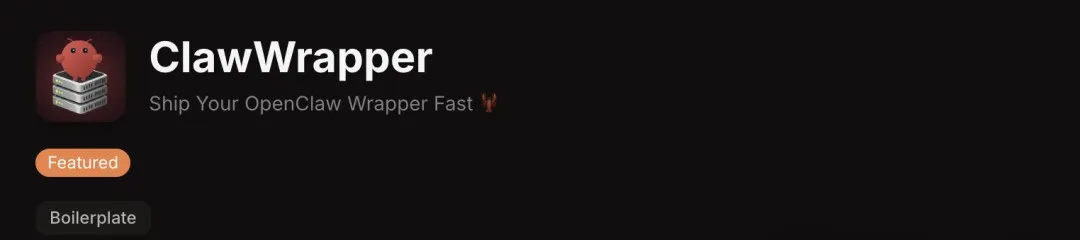
ClawWrapper addresses the final-mile problem: once an OpenClaw tool is built, publishing and distributing it efficiently. The platform simplifies the packaging and release process, making it faster to get tools into users' hands.
- Accelerated packaging workflow — significantly reduces the time from build to publish
- Quality-assured templates — packaging frameworks that prioritize stability and security
- Intuitive web interface — progress tracking and publishing management in one place
- Dedicated support team — responsive assistance for packaging-related questions
ClawWrapper is particularly relevant for developers who are shipping tools to external teams or listing them on directories like OpenClaw Directory itself.
Quick Comparison: OpenClaw Tools at a Glance
Tool | Category | Best For | Standout Feature |
Claw for All | Deployer / Hosting | All skill levels | Mobile app management |
OpenClaw Launch | Deployer | Speed-first teams | Sub-30-second deployment |
ClawTeam | AI Agent Teams | Multi-agent setups | Pre-configured agent blueprints |
Vibeclaw | Browser Deployer | Testing + sandboxing | Under-one-second startup |
Tinkerclaw | All-in-One Platform | Founders, small teams | Managed deployment + community |
ClawWrapper | Packaging | Tool publishers | Streamlined publishing pipeline |
How to Choose the Right OpenClaw Tool for Your Use Case
Selecting an OpenClaw deployment tool depends less on feature lists and more on the specific constraints of a given project. A few practical frameworks help narrow the decision:
- If deployment speed is the primary constraint — OpenClaw Launch or Vibeclaw are the most direct solutions.
- If the team lacks technical depth — Tinkerclaw's managed deployment and hands-on support absorbs the configuration complexity.
- If multi-agent orchestration is the goal — ClawTeam's pre-built configurations reduce the expertise barrier significantly.
- If tool distribution is the bottleneck — ClawWrapper handles the packaging pipeline so developers can focus on building.
- If remote management matters — Claw for All's mobile interface is unique among current options.
It is also worth noting that the OpenClaw Directory continues to grow. Developers can submit their own tools to the catalog, and the blog section offers structured guides ranging from introductory explainers ("What is OpenClaw and how does it work?") to advanced topics like token usage optimization and AI API cost benchmarking.
Common Mistakes When Adopting OpenClaw Ecosystem Tools
- Over-engineering early — starting with a full-featured platform like Tinkerclaw before validating simpler deployment paths can add unnecessary overhead at the prototype stage.
- Ignoring security configuration — deployers that abstract away Docker and environment setup may also obscure security settings; always verify isolation and access controls.
- Treating agent blueprints as final — pre-configured setups from tools like ClawTeam are starting points, not finished products. Customization is expected and necessary.
- Skipping documentation — each tool has distinct integration requirements; referencing official resources before deployment prevents most common failures.
Key Takeaways
- OpenClaw Directory catalogs 39 tools across nine categories, with filtering and sorting options that help developers identify the right fit quickly.
- The top six tools cover distinct use cases: rapid deployment (OpenClaw Launch, Vibeclaw), mobile management (Claw for All), AI agent orchestration (ClawTeam), full-service onboarding (Tinkerclaw), and tool publishing (ClawWrapper).
- Tinkerclaw is the most comprehensive option for non-technical founders, offering managed deployment, workflow automation, integrations, and an active developer community.
- Tool selection should be driven by team constraints — speed, technical depth, agent complexity, or distribution needs — rather than feature count alone.
- The OpenClaw Directory continues to expand, and its blog section provides structured learning resources from beginner to advanced levels.
Conclusion
The OpenClaw ecosystem has matured quickly. Within a short period, a structured directory, community ratings, and category-specific tools have emerged to help developers navigate what was previously an opaque and fragmented landscape. The six tools covered here — Claw for All, OpenClaw Launch, ClawTeam, Vibeclaw, Tinkerclaw, and ClawWrapper — represent the current community consensus on what works, each serving a distinct role in the deployment-to-distribution pipeline.
For teams that need to enrich their Claude MCP tools and AI agent workflows with real-time external data, platforms like BrowserAct offer complementary automation capabilities — including web scraping, API integrations, and no-code workflow triggers — that pair naturally with OpenClaw-based agent pipelines.
Additional API skills for Amazon, Google Maps, YouTube, and more are available through the BrowserAct template library, which covers common data extraction scenarios that agent workflows frequently require.

Ready to Extend Your OpenClaw Workflows?
Explore BrowserAct's no-code automation templates and API skills to connect your OpenClaw agents with live web data, product feeds, and review streams — no infrastructure required.
👉 Start building with BrowserAct | Browse Amazon Reviews API Skill | Google News API Skill


