Why 99% of n8n Workflows Fail to Make Money (15 Lessons)

Is your automation business actually profitable? We break down 15 hard lessons on why most n8n workflows fail to make money—and how to fix it.
The automation space is buzzing with promises of passive income and effortless workflows. Yet the reality is far more brutal. After months of research and analysis into the n8n ecosystem, one pattern emerges clearly: building workflows is easy. Making money from them? That's an entirely different game.
Most online tutorials and "expert" advice lead beginners down a costly path. These 15 lessons represent the gap between demo-ready automations and production-ready money-making systems.
1. Most Tutorials Are Nothing But Demos
The automation community is flooded with tutorial videos and case studies. However, most of these resources only demonstrate perfect scenarios with clean, controlled data. The moment real client data enters the equation, everything falls apart.
The critical differences between demos and production:
- Tutorial data is always clean and formatted; real clients have messy spreadsheets with duplicates and unexpected formats
- Course materials never cover what happens when an API rate limit hits at 2 AM
- Demonstrations skip the crucial error-handling that prevents midnight panic calls
The takeaway is clear: real-world experience cannot be replaced by watching tutorials. Working on actual client projects provides feedback that no course can teach.
2. The First Client Should Be Yourself
Automating one's own business processes first provides invaluable benefits. This approach offers:
- Real data to work with and optimize
- Genuine use cases that can be demonstrated to prospects
- A portfolio that proves delivery capability
This strategy consistently leads to landing real clients faster. A practitioner who automated their own CRM follow-ups subsequently secured a $500 project from a similar business owner who witnessed the results. The lesson? Practice on personal business processes first—the feedback is immediate and free.
3. Technical Skills Aren't the Real Bottleneck
Many automation practitioners spend months obsessively learning every n8n node and API integration. The market, however, doesn't reward complexity—it rewards results.
A wig entrepreneur in Ohio built a simple automation system that doubled her revenue without writing a single line of code. Meanwhile, skilled developers with extensive technical knowledge struggle to land their first paying clients. The determining factor isn't technical mastery; it's understanding client needs.
4. Perfection Is the Enemy of Progress
Early workflows often resemble disaster zones: nodes stacked on nodes, fragile connections, and constant crashes from single points of failure. Most business needs can actually be solved with 15 nodes or fewer. Complexity usually stems from inexperience rather than actual problem complexity.
Iteration beats perfection every time. Getting something working beats waiting for something ideal.
5. Pricing Model Determines Business Viability
Billing per project—one fixed fee per workflow—creates unpredictable income and constant anxiety about the next sale.
Value-based recurring pricing fundamentally changes the equation. Practitioners who charge clients a percentage of money saved or generated build sustainable businesses. Example: if automation saves clients 10,000 months, charging 2,000 creates mutual benefit. The client gains $8,000; the practitioner gains predictable recurring revenue.
Sustainable pricing models:
- Recurring retainer (monthly fee for ongoing services)
- Value-based percentage (taking a cut of documented savings)
- Usage-based fees (charging per automation execution)
6. The Most Valuable Automation Is Boring
Calendar reminders, CRM updates, email sorting—these aren't glamorous. Yet they're exactly what clients actually pay for.
Before chasing the next "revolutionary" AI tool, the relevant question becomes: Can this save the client two hours every single day? That's where the real money lives.
7. The Market Opportunity Is Massive
Every small business continues doing manual work that could be automated. The opportunity is enormous.
A consultant who built a simple calendar reminder system for dental offices charged $3,000 per implementation and booked six months out. The gaps in the market aren't where most practitioners assume—they're in unglamorous daily tasks.
8. Design for Failure from Day One
Users enter incorrect data. APIs go down. Workflows crash. These aren't exceptions—they're certainties.
Building systems to fail gracefully requires assuming everything will break at some point. Error-handling must be designed into every workflow from the start.
Essential error-handling practices:
- Always include try/catch nodes for exception handling
- Set up alert notifications when workflows fail
- Create fallback paths for critical business processes
- Test intentionally with malformed and incorrect data
This mindset prevents countless sleepless nights and preserves client trust.
9. Maintenance Is Non-Negotiable
Every automation system requires ongoing maintenance. Building this into the pricing model from the start is essential.
Charging $500/month for maintenance sounds expensive until explaining the alternative. Without proper maintenance, workflows silently fail, data becomes corrupted, and clients lose trust in the entire automation concept.
10. Niche Down or Get Lost
Saying "I automate dental practices" produces vague positioning. Saying "I reduce no-show rates for dental offices by 40%" creates a compelling product.
Specific problems receive specific budgets. General claims get ignored.
The niche formula: Specific industry + Specific problem + Measurable result = Market positioning that sells
11. Competition Is Largely Imagined
Many practitioners stress about competing with other automation freelancers. In reality, every company has unique processes, systems, and needs. What works perfectly for Company A may fail entirely for Company B.
The goal isn't defeating competitors—it's finding 10 clients who need exactly what is offered. That's all it takes to build a sustainable business.
12. Clients Buy Results, Not Features
"Automate my invoice processing" describes a feature.
"Get me paid 15 days faster" describes a result.
The second version gets clients excited. The second version justifies premium pricing.
Sell the outcome. Let the features be the pleasant surprise.
13. Tools Are Just Tools
Zapier, Make, n8n—practitioners make money with all of them. The platform choice matters far less than execution quality. Picking one platform and mastering it beats jumping between tools constantly.
The money is in mastery, not in the tool itself.
14. The "Ready" Myth
Many aspiring automation practitioners constantly feel inadequate—that they aren't skilled enough yet. Research shows: nobody ever feels truly ready.
The difference between successful freelancers and the rest comes down to one factor: the successful ones started before they felt prepared.
15. Translation Is the Most Valuable Skill
The ability to translate business problems into technical solutions—and then translate technical results back into business value—creates premium positioning.
Clients don't care about webhooks or APIs. They care about saving money and making money. Speaking their language while handling the technical details creates lasting relationships.
The Bottom Line
The first project might be terrible. The tenth improves. By the fiftieth, a sustainable business emerges.
For those tired of fighting anti-bot measures and seeking reliable browser automation and web data scraping, the right tool can bridge the gap between broken workflows and successful delivery. BrowserAct handles the complex browser scenarios that break traditional API-based workflows—residential IPs, human behavior simulation, and seamless integration with n8n, Make, and Zapier.
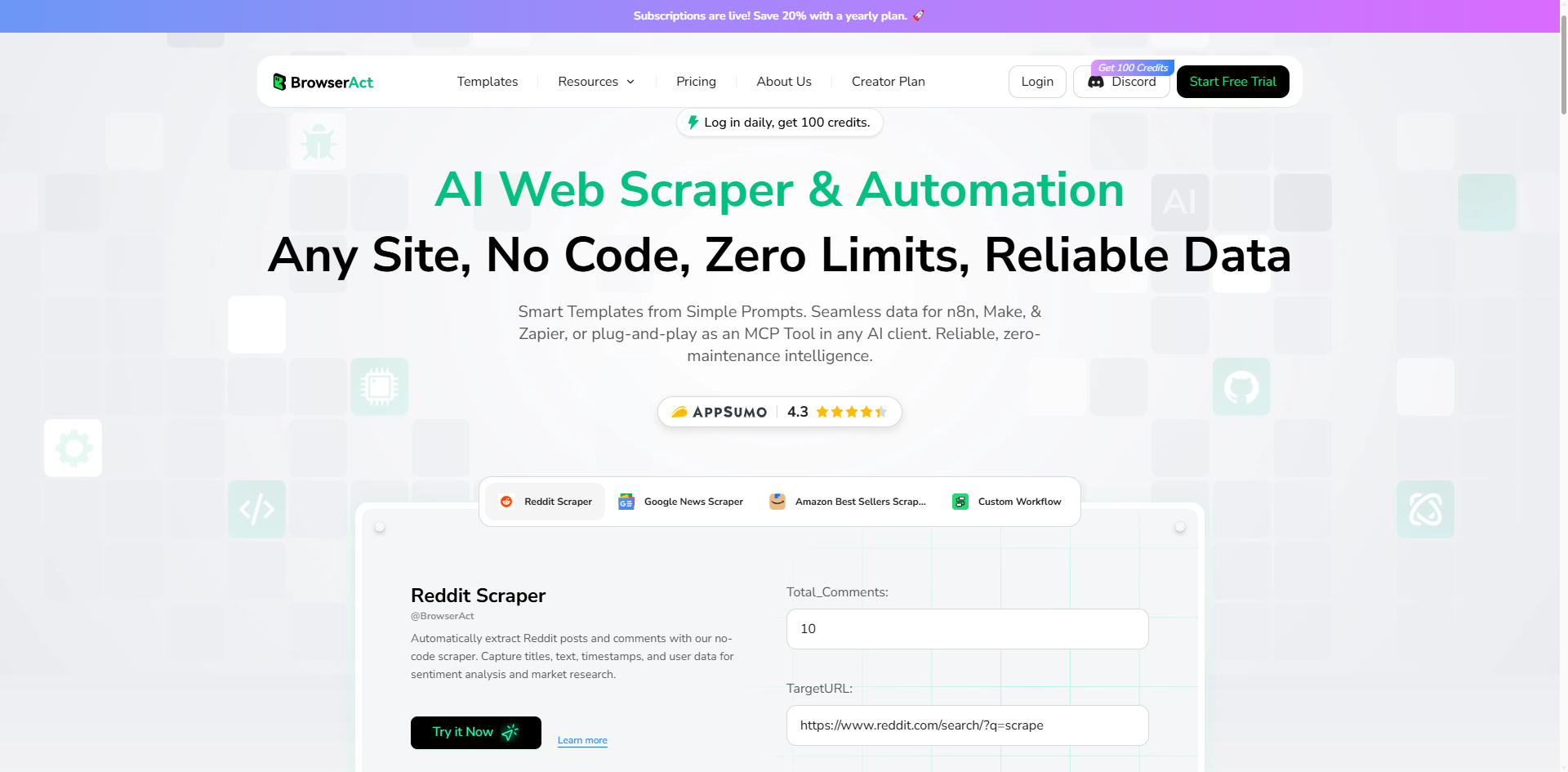
Ready to stop losing money on broken workflows? Try BrowserAct today.
Related reading: Why Your AI Agent Fails on Cloudflare Sites And How to Fix
Related reading: Why Your AI Agent Fails on Cloudflare Sites | BrowserAct


