

YouTube Videos Scraper is a BrowserAct Bot template for collecting structured video records from public YouTube search results or public channel video pages. Configure a keyword or channel URL and the count, then run the Bot to return clean video metadata for research, content monitoring, creator discovery, competitive analysis, or downstream automation.
What Does BrowserAct YouTube Videos Scraper Do?
This template opens a public YouTube search results page when a keyword is provided, or a public channel videos page when a channel URL is provided. It reads individual video cards, scrolls to load more results, excludes non-video result types, and returns one structured record per video.
Key Features
- Search YouTube videos by keyword.
- Extract videos from a public channel videos page.
- Configure keyword, channel URL, and result count.
- Extract title, video URL, channel name, channel URL, views, published time, duration, description snippet, thumbnail URL, and rank.
- Scroll public YouTube pages until the requested count is reached or no more videos load.
- Return empty snippets when YouTube does not show descriptions, especially on channel video pages.
What Data Can I Extract from YouTube?
Field | Description |
|---|---|
| Video title shown in the YouTube result or channel video card. |
| Public YouTube watch URL. |
| Channel name associated with the video. |
| Public channel URL. |
| Visible view count text. |
| Visible published date or relative time. |
| Video duration when shown. |
| Visible snippet in search results; often empty on channel video pages. |
| Thumbnail URL from the page or a canonical thumbnail fallback. |
| Video rank in the returned order. |
How to Use YouTube Videos Scraper
- Click Run task.
- Enter a keyword or a channel URL.
- Set the count of videos to collect.
- Run the Bot and review the structured video records.
- Export the result or connect it to an API, workflow builder, or agent workflow.
Input Parameters
Parameter | Required | Default | Description |
|---|---|---|---|
| No |
| Search term used to build the YouTube search results page. Used when |
| No | empty | Public YouTube channel URL. When provided, the Bot collects videos from that channel's public videos page instead of search. |
| Yes |
| Maximum number of public video records to return. |
Example Output
The table below uses records preserved from the validated Bot run. Up to the first 5 records are shown, and long values are shortened in this documentation preview.
| title | video_url | channel_name | channel_url | views | published_time | duration | description_snippet | thumbnail_url | rank |
|---|---|---|---|---|---|---|---|---|---|
| Browser Automation in 2 minutes | ByteFlow Basics | https://www.youtube.com/watch?v=EQNsKQwoKlE | Byteflow_ | https://www.youtube.com/@byteflow_bot | 66 views | 1 month ago | 2:35 | Automate repetitive browser tasks without writing... | https://i.ytimg.com/vi/EQNsKQwoKlE/hqdefault.jpg | 2 |
How Does it Work?
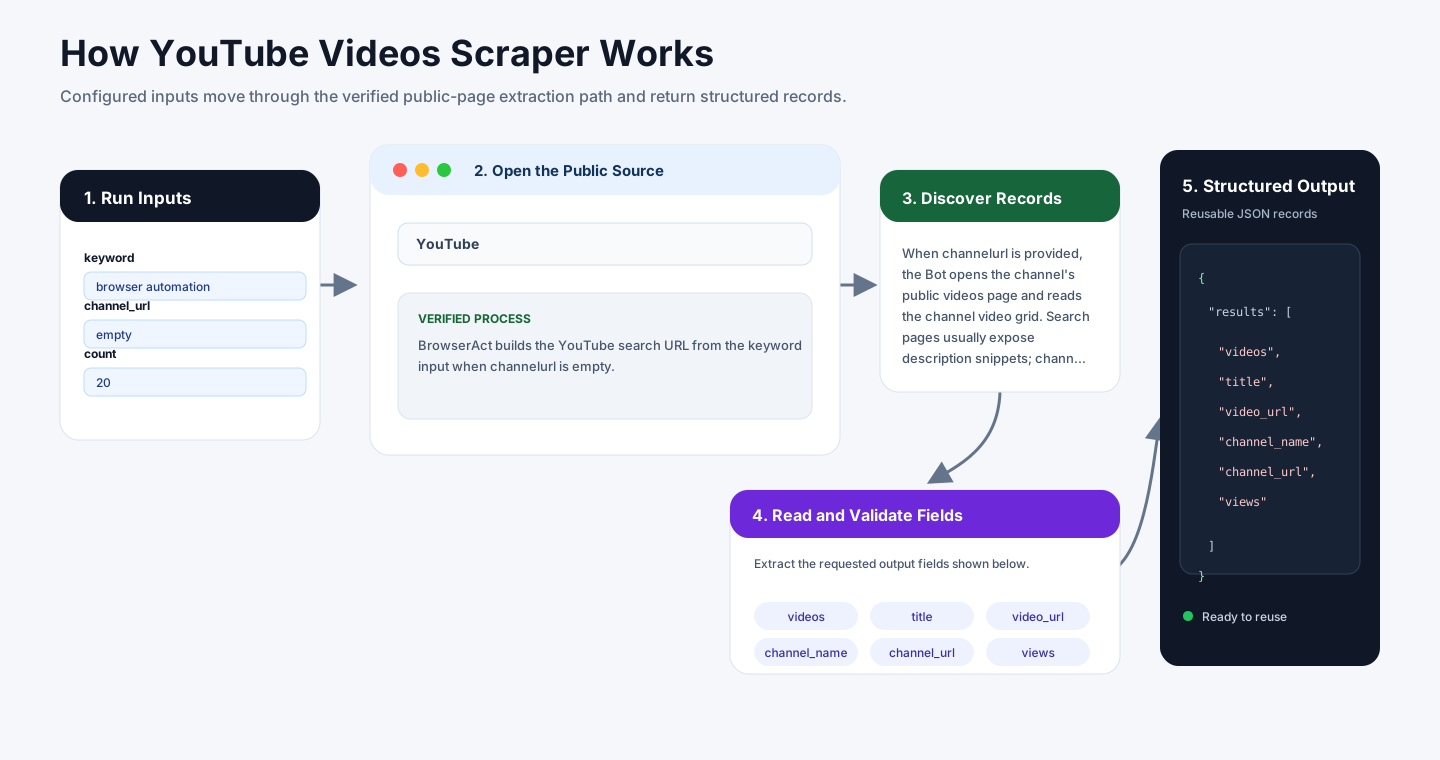
BrowserAct builds the YouTube search URL from the keyword input when channel_url is empty. In the validated default run, the Bot opened the public YouTube search page for browser automation, read individual ytd-video-renderer video result cards, excluded playlist and course result containers, and scrolled until it collected the requested number of videos.
When channel_url is provided, the Bot opens the channel's public videos page and reads the channel video grid. Search pages usually expose description snippets; channel video pages usually do not, so description_snippet is returned empty when it is not visible. Thumbnail URLs are taken from the rendered page when available, with a canonical thumbnail URL fallback based on the visible video ID.
How to Build a New Scraper Bot with Agent Built
Step 1: Describe the Data You Need
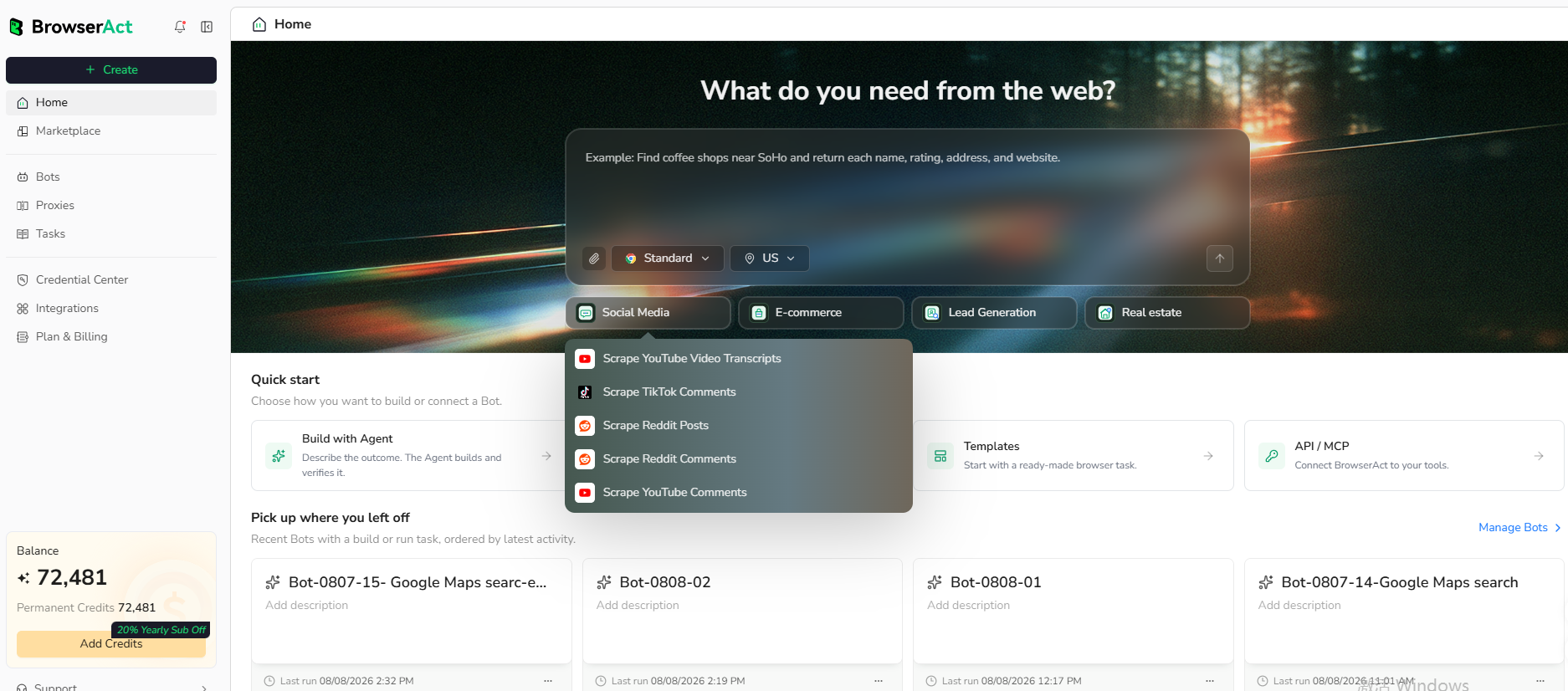
Open BrowserAct and start Agent Built from the Home prompt box or from Create -> Build with Agent. Paste a clear request that includes the website, the records to collect, the filters or search conditions, the fields to return, the result limit, and the inputs you want to reuse later.
Step 2: Let BrowserAct Build and Test the Bot
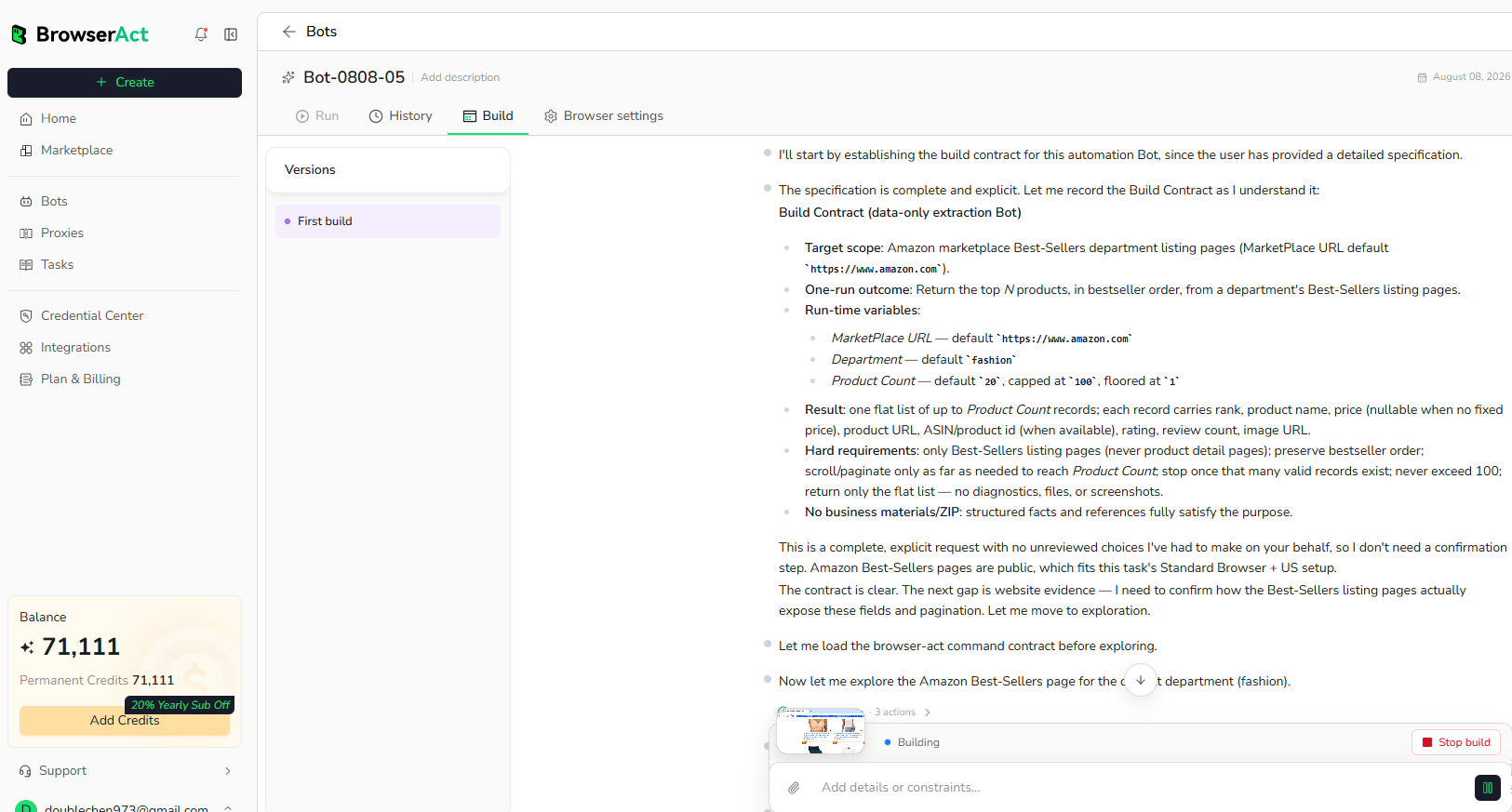
BrowserAct explores the live website, works out the navigation and extraction path, and validates the result. If BrowserAct asks for clarification, reply in the same build conversation with the missing URL, condition, field, example, or expected output.
Step 3: Run the Bot and Review the Result
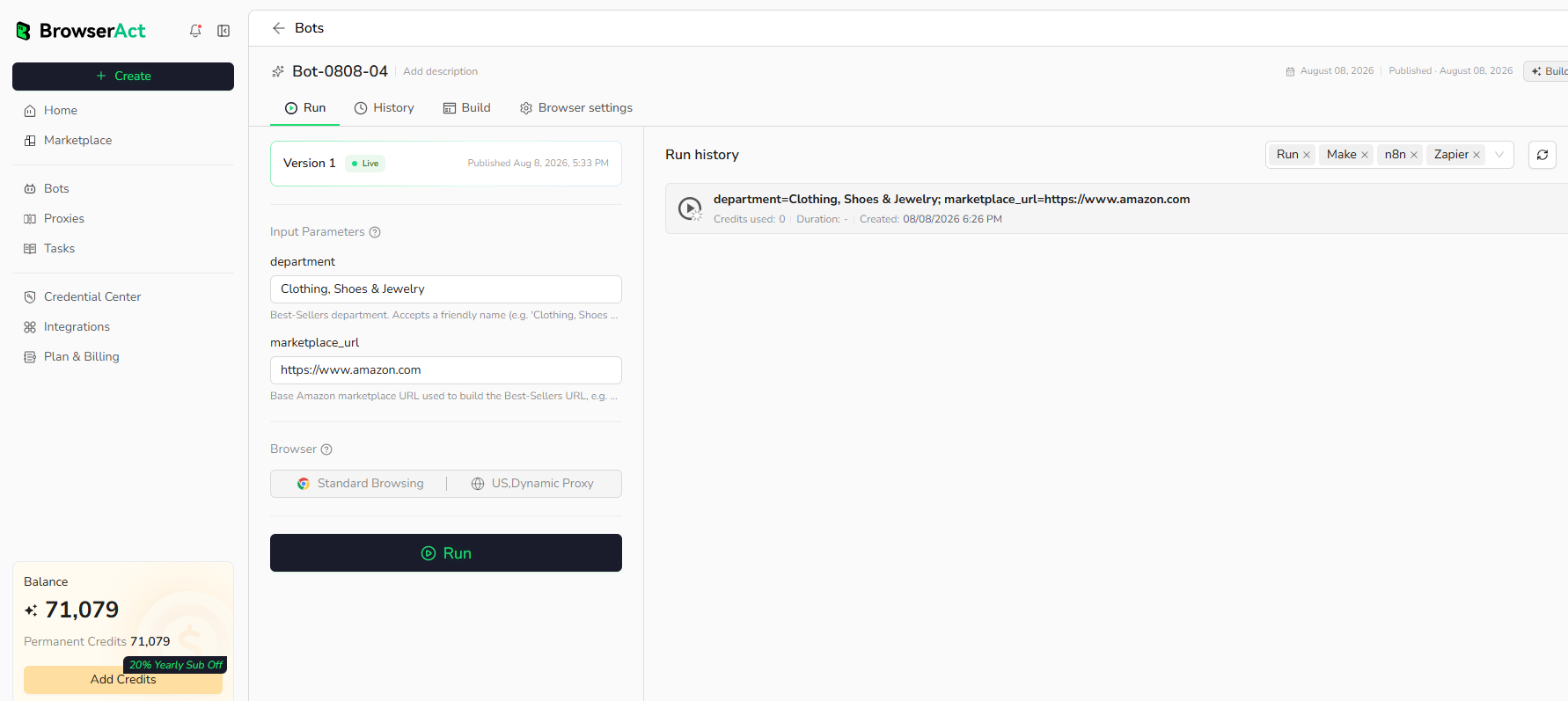
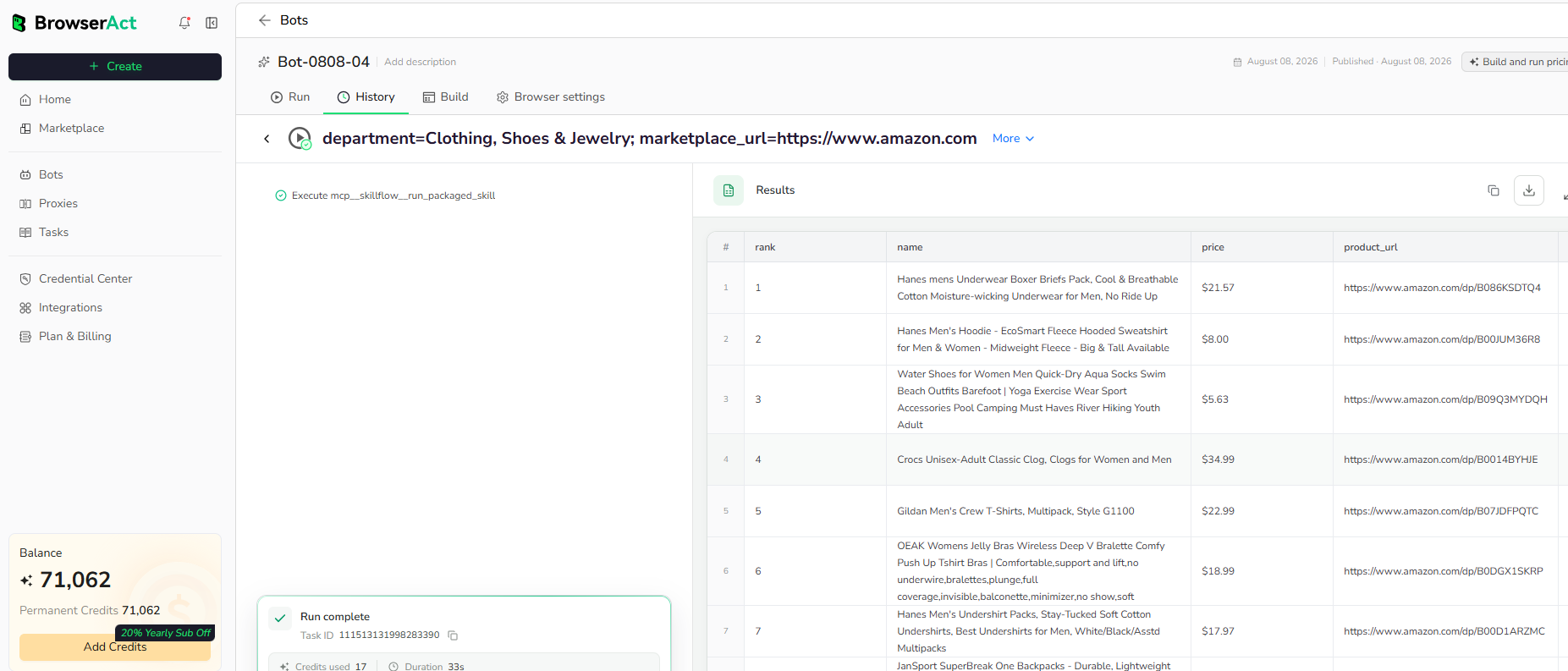
When the build is complete, run the Bot with the default inputs first. Review the structured records, source URLs, missing fields, and row count before reusing the Bot with new inputs or connecting it to another workflow.
Why Scrape YouTube Video Results?
YouTube video metadata helps teams monitor content trends, find creators, compare topics, track competitors, research video formats, and build content intelligence feeds. A reusable BrowserAct Bot makes the workflow repeatable without maintaining a custom browser script.
Who Can Use This Template?
- Content marketers researching video topics.
- Creator partnership teams finding channels and videos.
- SEO teams monitoring YouTube search results.
- Market researchers tracking category conversations.
- Automation builders sending video metadata into spreadsheets, CRMs, dashboards, or agents.
How Many Results Can You Scrape?
Use count to control the number of videos returned. YouTube loads more public videos as the page scrolls. If fewer public videos are available than requested, the Bot returns the available records.
Automation and Export
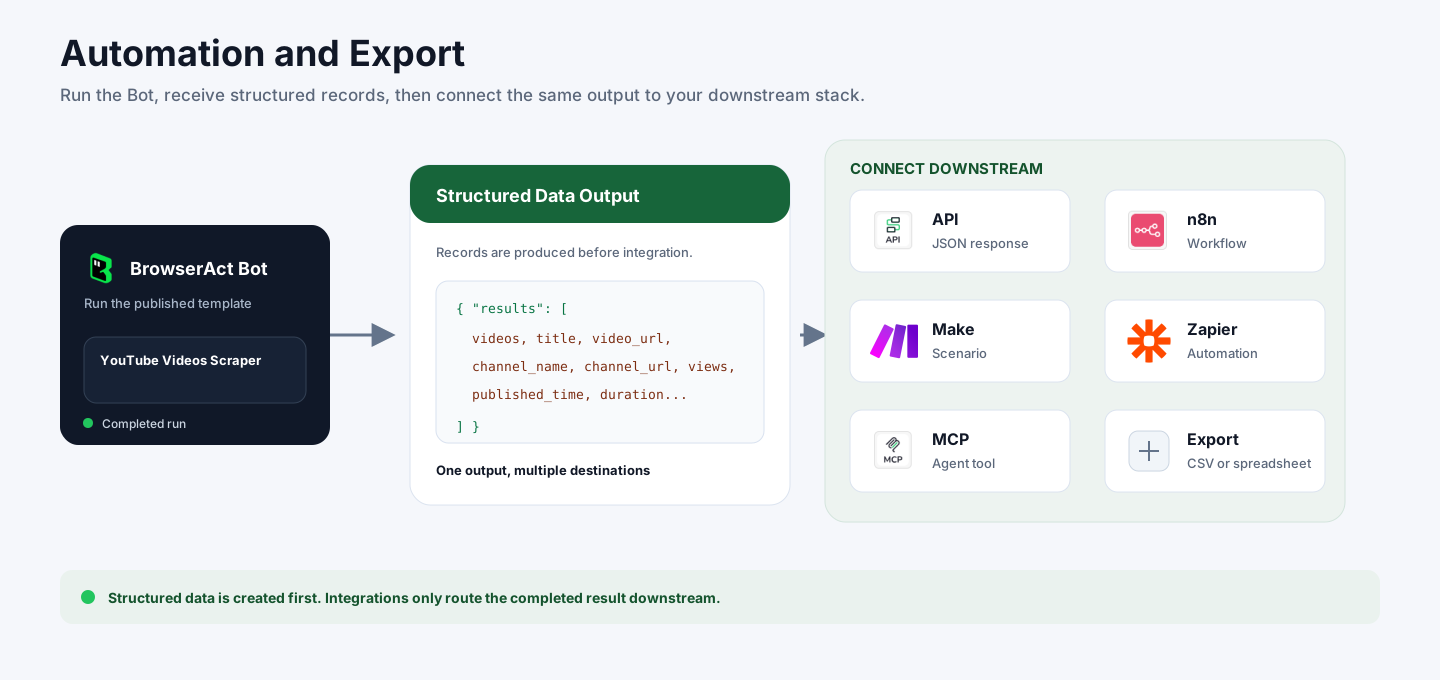
BrowserAct returns structured video data first. You can then use the output through API JSON responses, n8n workflows, Make scenarios, Zapier automations, MCP-based agent workflows, or manual CSV review depending on your downstream system.
Need Help?
Contact us at
Discord: Discord Community
E-mail: service@browseract.com
