

Website Content Scraper collects readable content and metadata from a configurable public webpage. It can also create a concise summary and a short Facebook post grounded only in the extracted page content.
What Does BrowserAct Website Content Scraper Do?
This BrowserAct template runs a validated, reusable extraction path against publicly accessible pages. Configure the inputs, run the Bot, and receive structured records without writing selectors or browser scripts.
Key Features
- Open any publicly accessible webpage URL.
- Capture the page title, author, publication date, main content, and source URL.
- Create a concise content summary and optional Facebook post.
- Scroll when needed before reading the visible page.
- Return one structured record per requested public page.
What Data Can I Extract from Public Websites?
| Field | Description |
|---|---|
page_title |
Visible webpage or article title. |
published_date |
Publication date when visible. |
author |
Visible author or publisher name. |
main_content |
Clean readable page content. |
source_url |
Final public source URL. |
summary |
Short summary based on extracted content. |
facebook_post |
Concise social post based on extracted content. |
How to Use Website Content Scraper
- Click Run task.
- Enter the configurable values shown below.
- Run the Bot and review the structured records.
- Export the result or connect it to an API, automation platform, or agent workflow.
Input Parameters
| Parameter | Required | Default | Description |
|---|---|---|---|
Website URL |
Yes | https://www.browseract.com/blog |
Public webpage to extract. |
Count |
Yes | 1 |
Maximum number of supplied pages to process. |
Example Output
The table below uses records preserved from the validated Bot run. Up to the first 5 records are shown, and long values are shortened in this documentation preview.
| page_title | published_date | author | main_content | source_url | summary | facebook_post |
|---|---|---|---|---|---|---|
| Example article title | 2026-08-20 | Editorial Team | Clean readable webpage content... | https://example.com/article | A concise summary of the public page. | A short post based on the extracted article. |
How Does it Work?
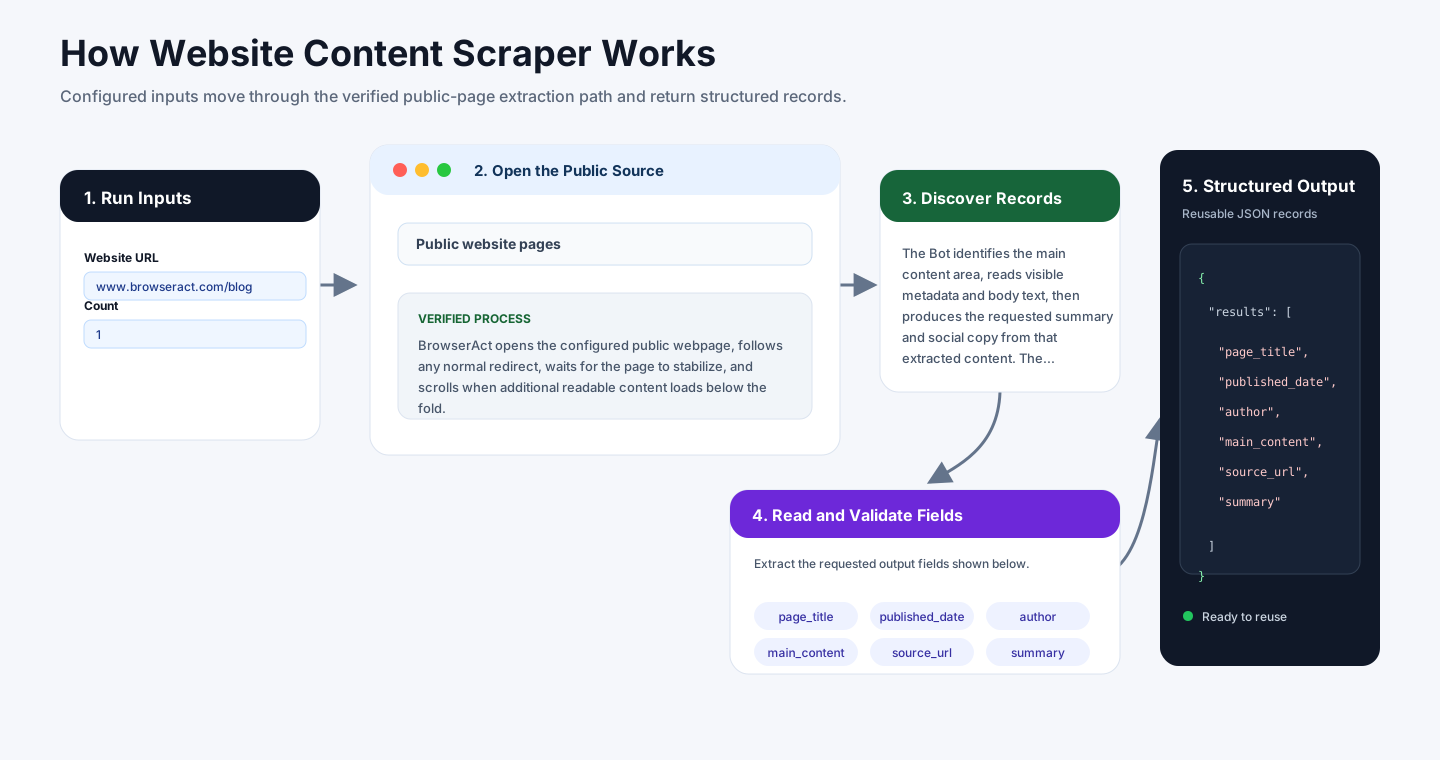
BrowserAct opens the configured public webpage, follows any normal redirect, waits for the page to stabilize, and scrolls when additional readable content loads below the fold.
The Bot identifies the main content area, reads visible metadata and body text, then produces the requested summary and social copy from that extracted content. The successful default run returned one complete article record.
How to Build a New Scraper Bot with Agent Built
Step 1: Describe the Data You Need
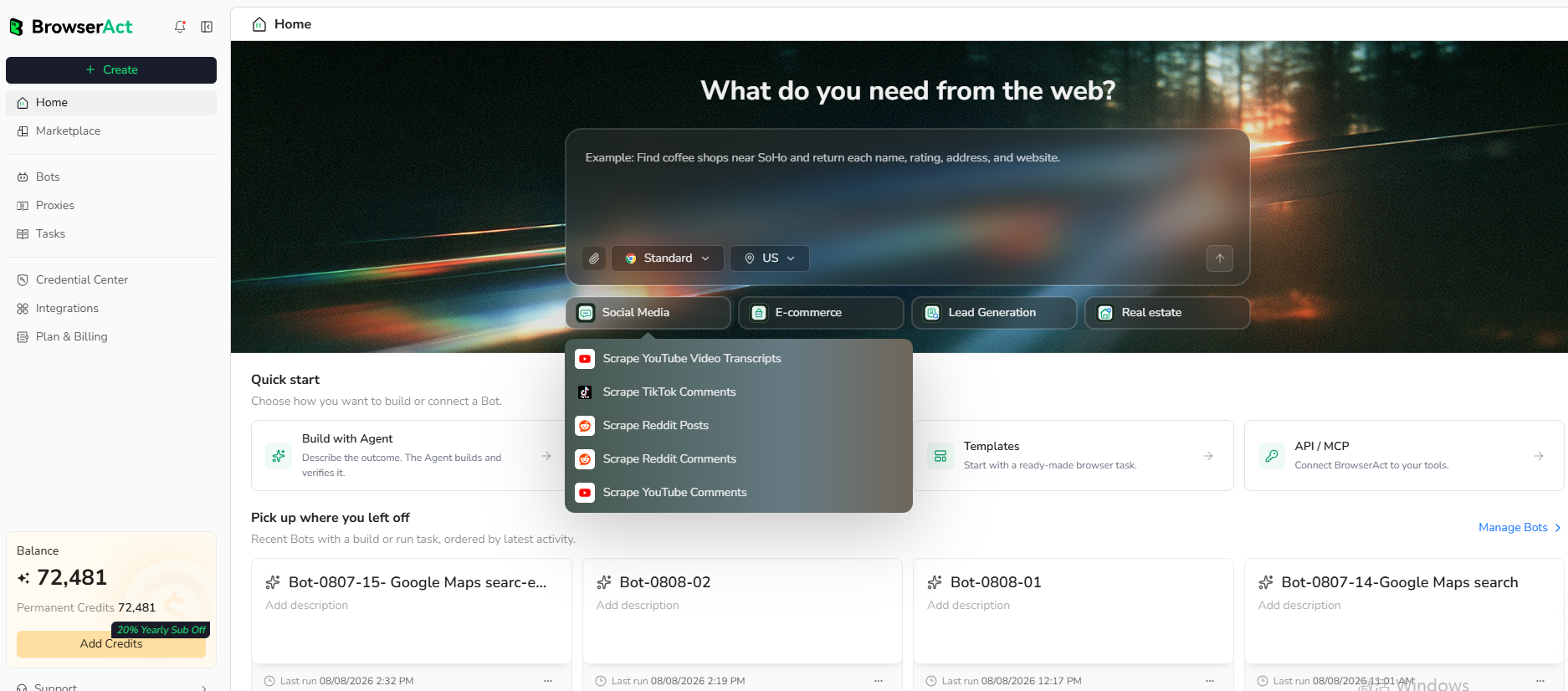
Open BrowserAct and start Agent Built from the Home prompt box or from Create -> Build with Agent. Paste a clear request that includes the website, the records to collect, the filters or search conditions, the fields to return, the result limit, and the inputs you want to reuse later.
Step 2: Let BrowserAct Build and Test the Bot
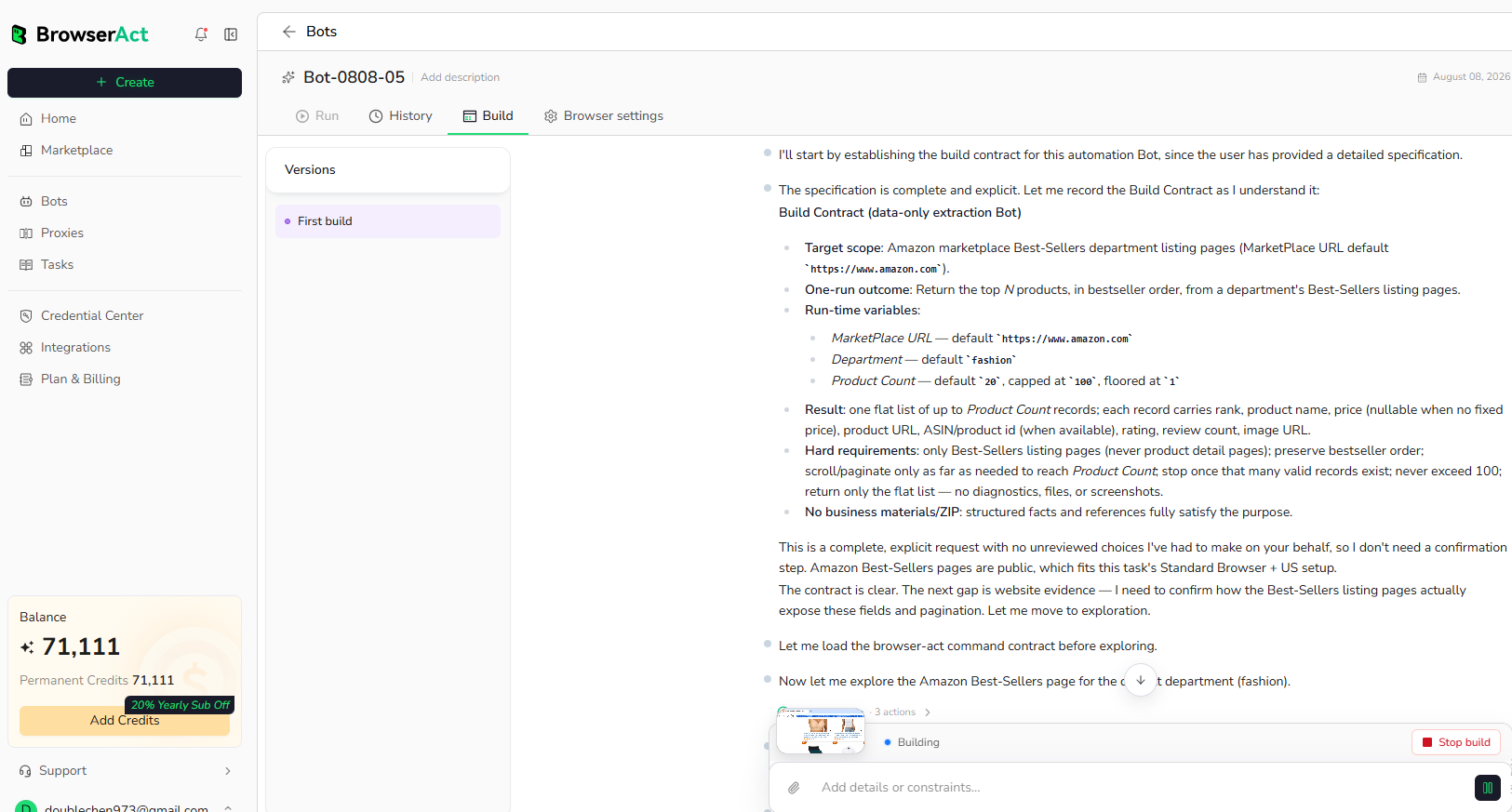
BrowserAct explores the live website, works out the navigation and extraction path, and validates the result. If BrowserAct asks for clarification, reply in the same build conversation with the missing URL, condition, field, example, or expected output.
Step 3: Run the Bot and Review the Result
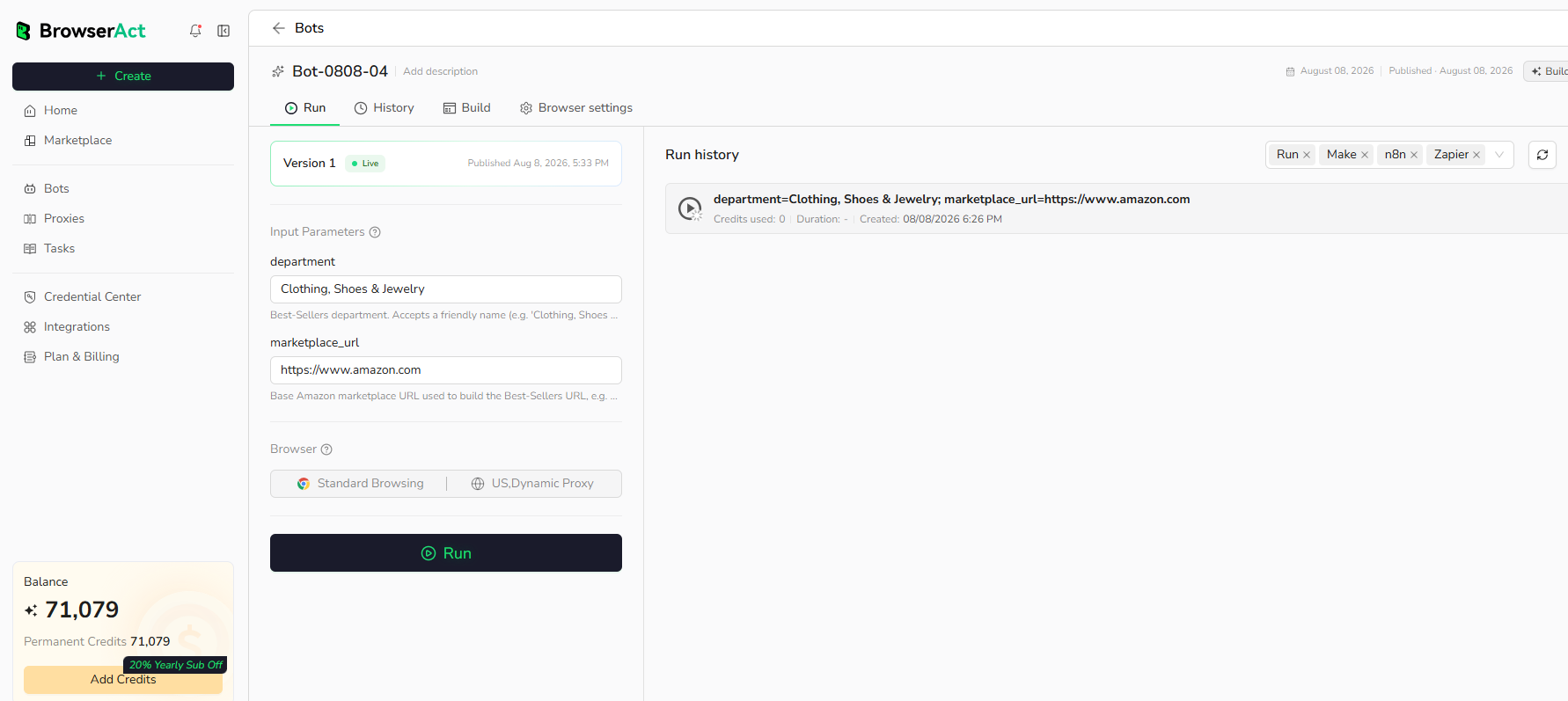
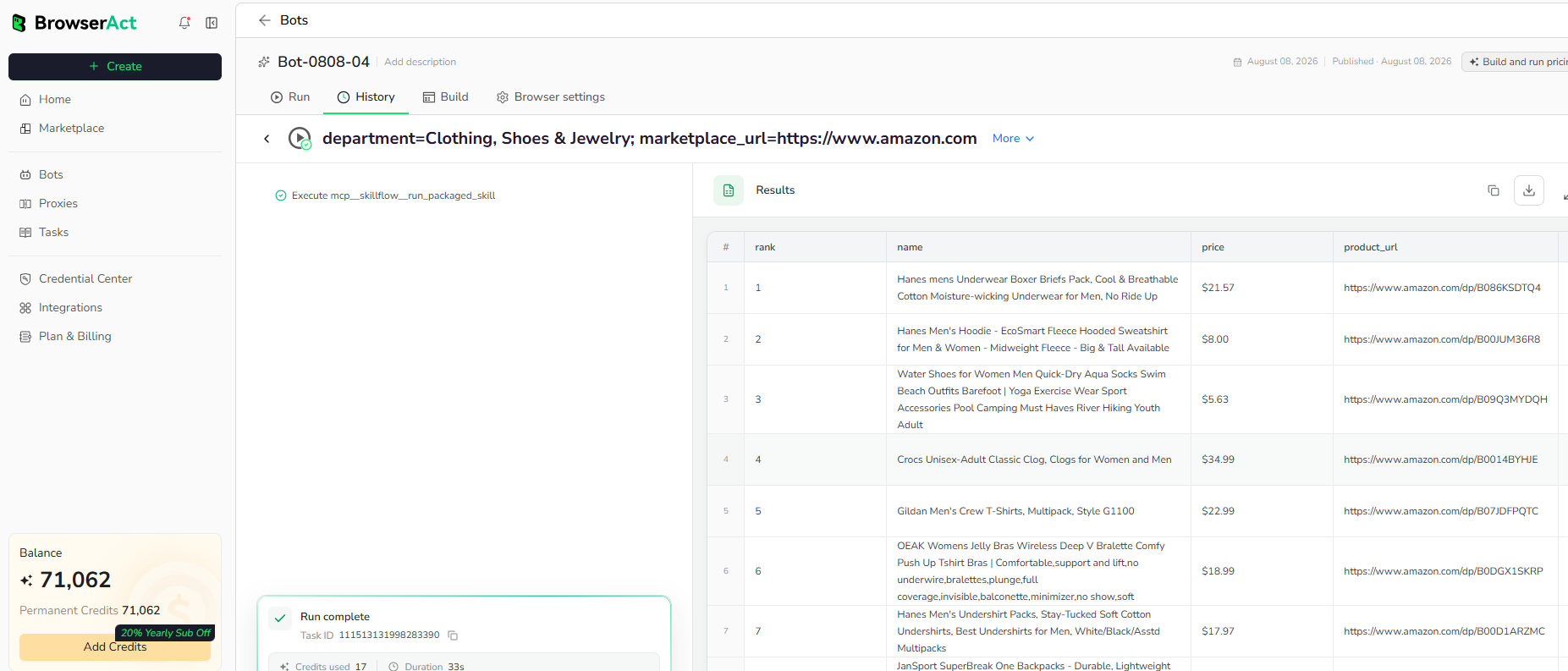
When the build is complete, run the Bot with the default inputs first. Review the structured records, source URLs, missing fields, and row count before reusing the Bot with new inputs or connecting it to another workflow.
Why Use Website Content Scraper?
Turn public webpages into reusable structured content for research, monitoring, knowledge bases, editorial planning, and downstream content operations.
Who Can Use This Template?
- Content and editorial teams.
- Researchers building source libraries.
- Marketing teams repurposing public content.
- Automation builders sending webpage data into other systems.
How Many Results Can You Scrape?
Use Count to limit the number of supplied public pages processed in one run. Pages protected by login or paywalls are outside this template scope.
Automation and Export
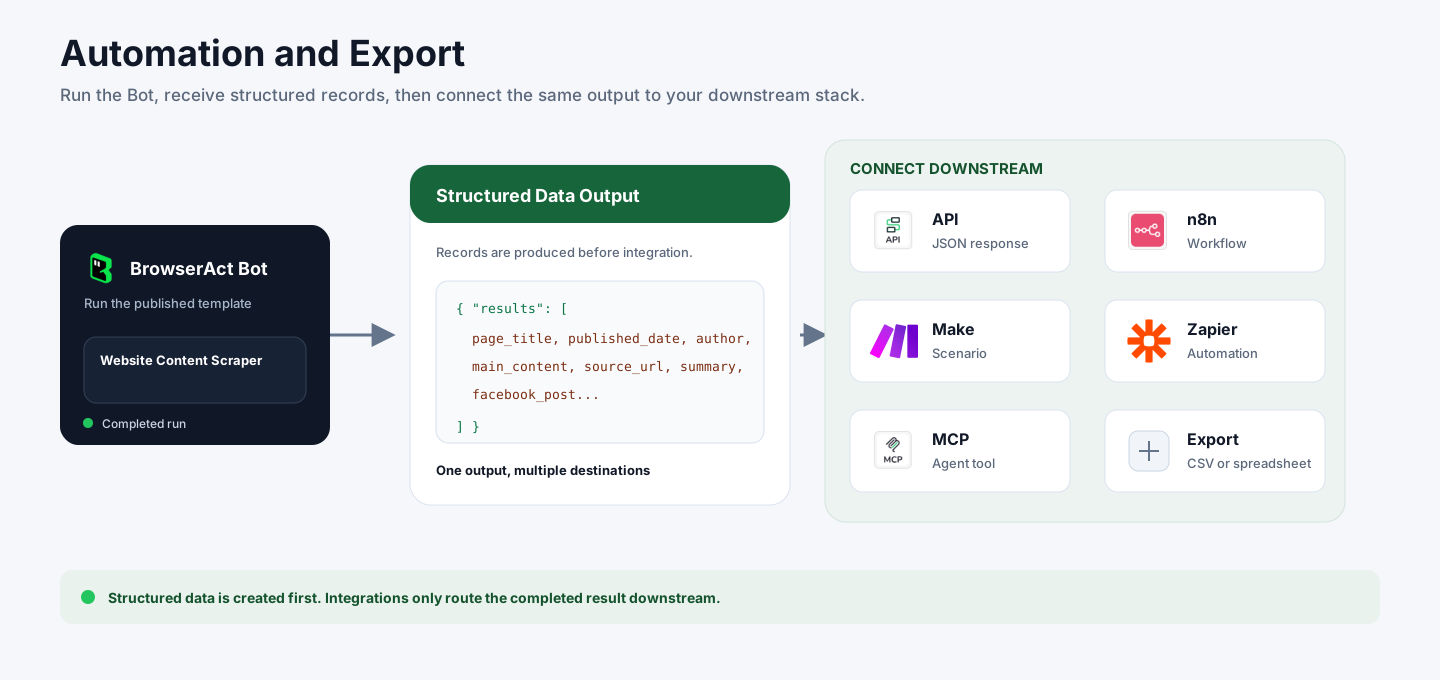
BrowserAct returns structured data first. You can then use the completed output through API JSON responses, n8n workflows, Make scenarios, Zapier automations, MCP-based agent workflows, or manual CSV and spreadsheet review.
Need Help?
Contact us at
Discord: Discord Community
E-mail: service@browseract.com
