

Hugging Face Datasets Search Scraper is a BrowserAct Bot template for collecting structured public dataset records from Hugging Face. Configure a base URL, keyword, and result count, then run the Bot to return ranked dataset metadata for AI research, dataset discovery, catalog enrichment, competitive analysis, or automation workflows.
What Does BrowserAct Hugging Face Datasets Search Scraper Do?
This template opens Hugging Face's public dataset search API, parses dataset records, derives dataset page URLs, and returns one structured record per dataset.
Key Features
- Extract public Hugging Face dataset search results without requiring a login.
- Capture dataset ID, URL, author, dataset name, tags, downloads, likes, created date, last modified date, private status, gated status, and keyword.
- Sort results by downloads in descending order.
- Configure base URL, keyword, and count.
- Handle empty result sets cleanly.
What Data Can I Extract from Hugging Face?
| Field | Description |
|---|---|
rank |
Search result position assigned by the Bot. |
dataset_id |
Full Hugging Face dataset ID. |
dataset_url |
Public dataset page URL. |
author |
Author or namespace. |
dataset_name |
Dataset name derived from the dataset ID. |
tags |
Public dataset tags as a comma-separated string. |
downloads |
Download count. |
likes |
Like count. |
last_modified |
Last modified date. |
created_at |
Created date. |
private |
Whether the dataset is marked private in the response. |
gated |
Gated status when returned. |
search_keyword |
Keyword used for the run. |
How to Use Hugging Face Datasets Search Scraper
- Click Run task.
- Enter the Hugging Face base URL.
- Enter a dataset topic, task, language, modality, or research keyword.
- Set how many dataset records to collect.
- Run the Bot and review the structured dataset results.
- Reuse the Bot with another keyword or connect the output to your workflow.
Input Parameters
| Parameter | Required | Default | Description |
|---|---|---|---|
base_url |
Yes | https://huggingface.co |
Hugging Face site base URL without a trailing slash. |
keyword |
Yes | sentiment |
Search keyword used to find public datasets. |
count |
Yes | 20 |
Maximum number of public dataset records to collect. |
Example Output
The table below uses records preserved from the validated Bot run. Up to the first 5 records are shown, and long values are shortened in this documentation preview.
| rank | dataset_id | dataset_url | author | dataset_name | tags | downloads | likes | last_modified | created_at | private | gated | search_keyword |
|---|---|---|---|---|---|---|---|---|---|---|---|---|
| 1 | shmuhammad/AfriSenti-twitter-sentiment | https://huggingface.co/datasets/shmuhammad/AfriSenti-twitter-sentiment | shmuhammad | AfriSenti-twitter-sentiment | task_categories:text-classification, task_ids:sentiment-analysis, language:eng | 13650 | 9 | 2023-09-03T09:59:15.000Z | 2023-02-16T21:02:20.000Z | false | false | sentiment |
How Does it Work?
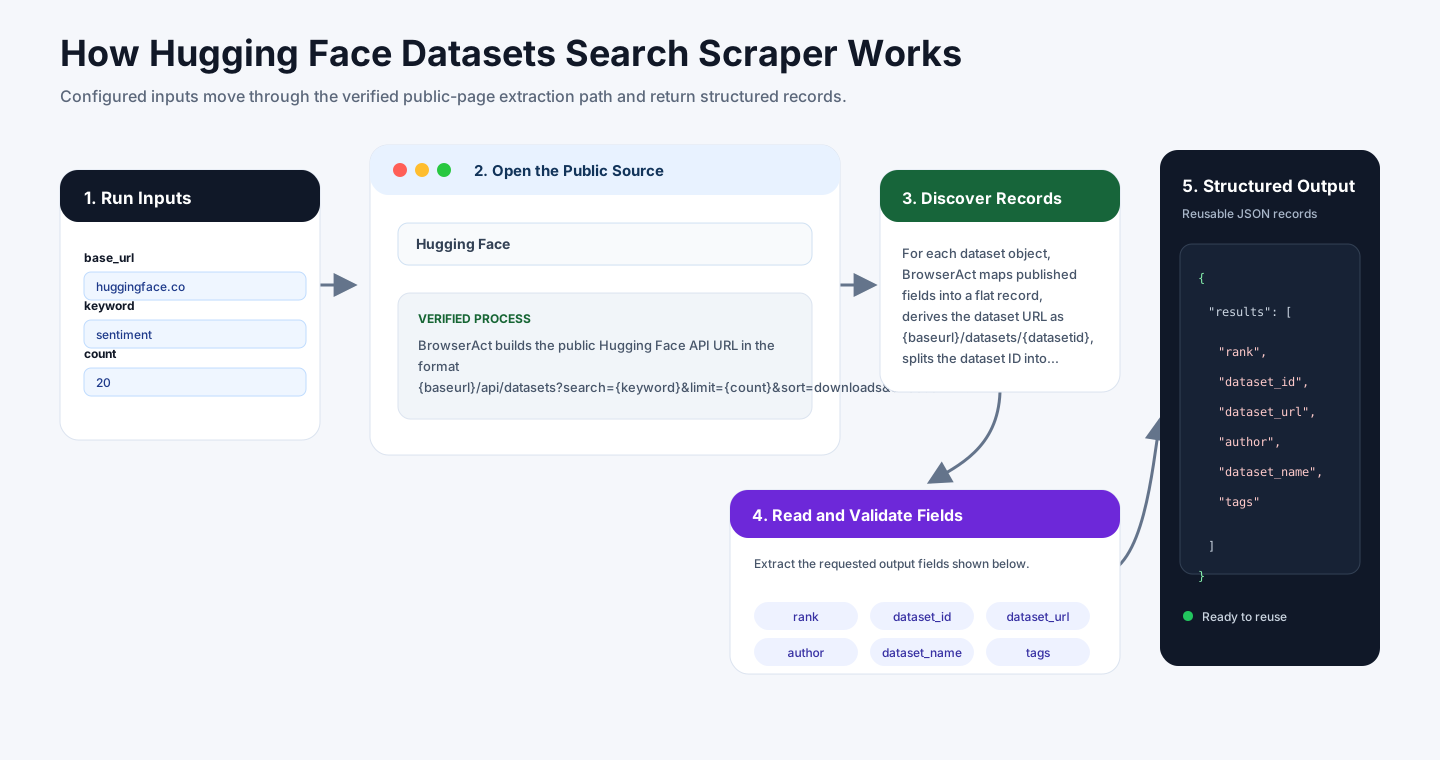
BrowserAct builds the public Hugging Face API URL in the format {base_url}/api/datasets?search={keyword}&limit={count}&sort=downloads&direction=-1. The response is a JSON array sorted by downloads in descending order.
For each dataset object, BrowserAct maps published fields into a flat record, derives the dataset URL as {base_url}/datasets/{dataset_id}, splits the dataset ID into author and dataset name, and normalizes tags into a comma-separated string for table-friendly output.
How to Build a New Scraper Bot with Agent Built
Step 1: Describe the Data You Need
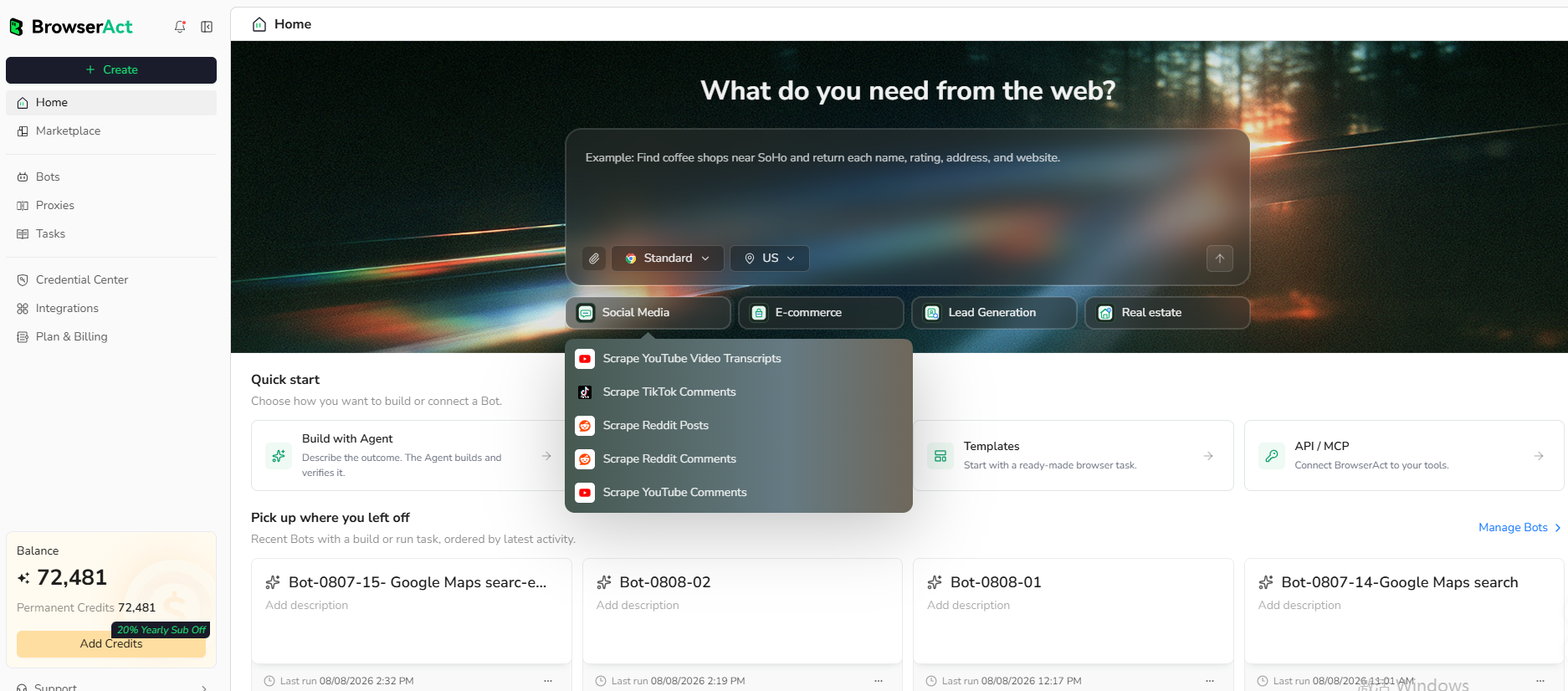
Open BrowserAct and start Agent Built from the Home prompt box or from Create -> Build with Agent. Paste a clear request that includes the website, the records to collect, the filters or search conditions, the fields to return, the result limit, and the inputs you want to reuse later.
Step 2: Let BrowserAct Build and Test the Bot
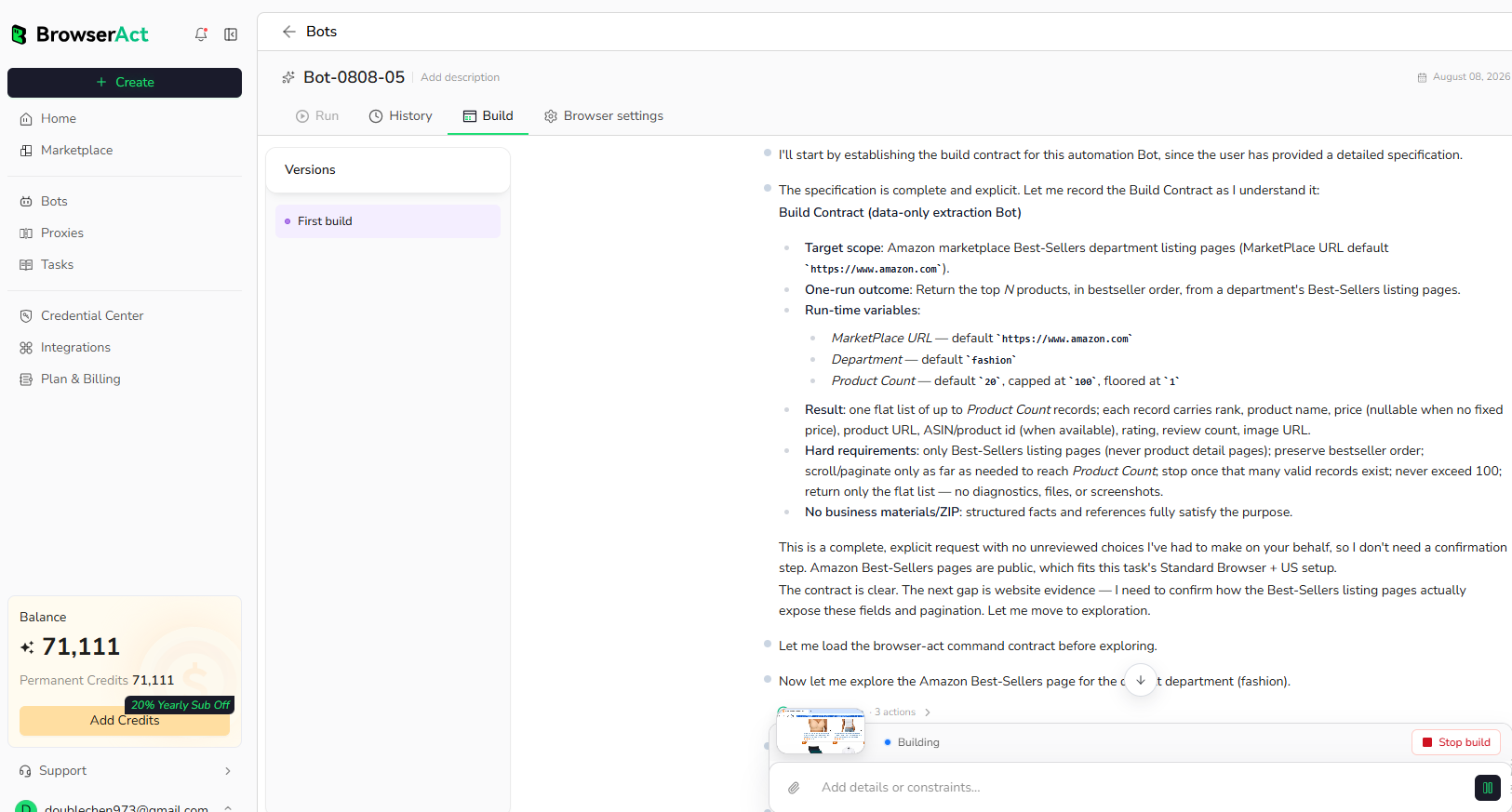
BrowserAct explores the live website, works out the navigation and extraction path, and validates the result. If BrowserAct asks for clarification, reply in the same build conversation with the missing URL, condition, field, example, or expected output.
Step 3: Run the Bot and Review the Result
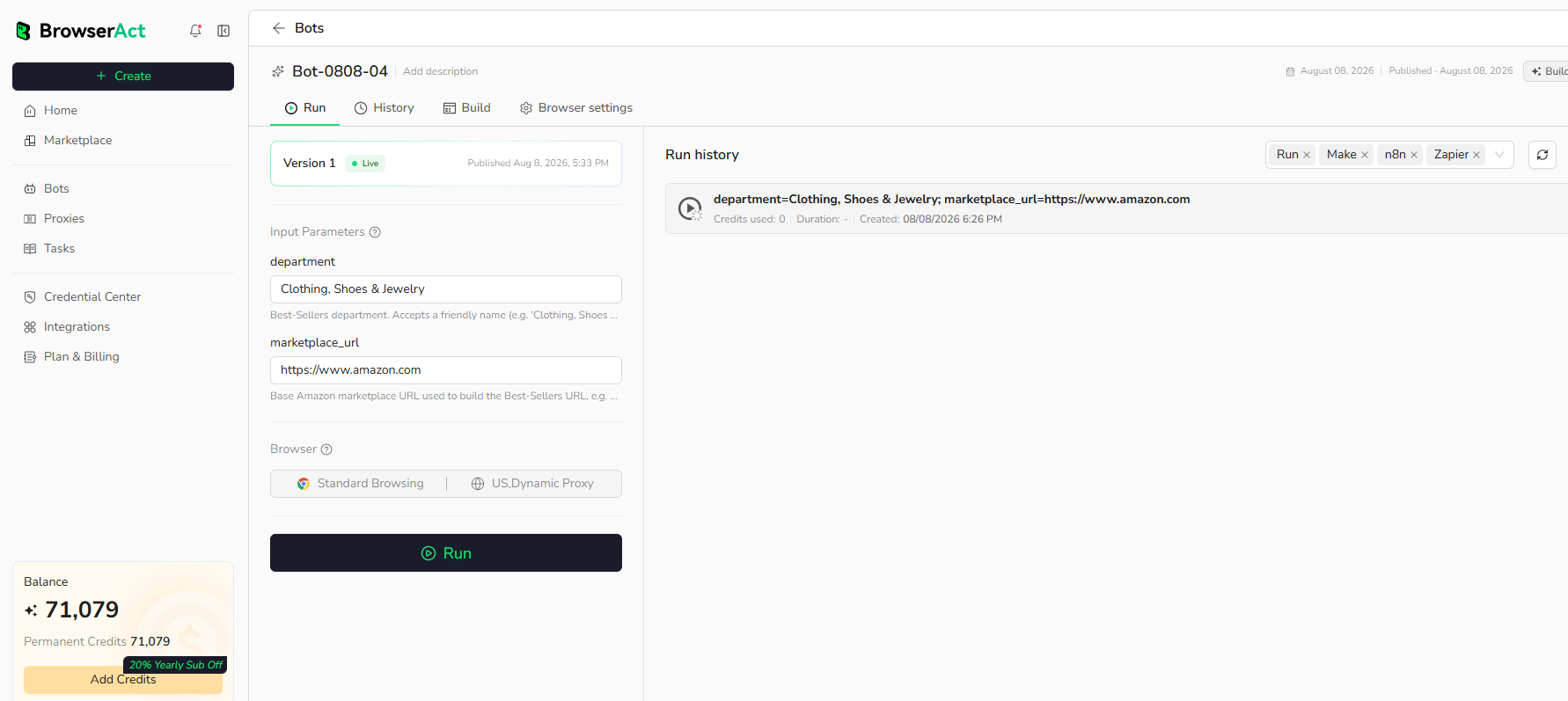
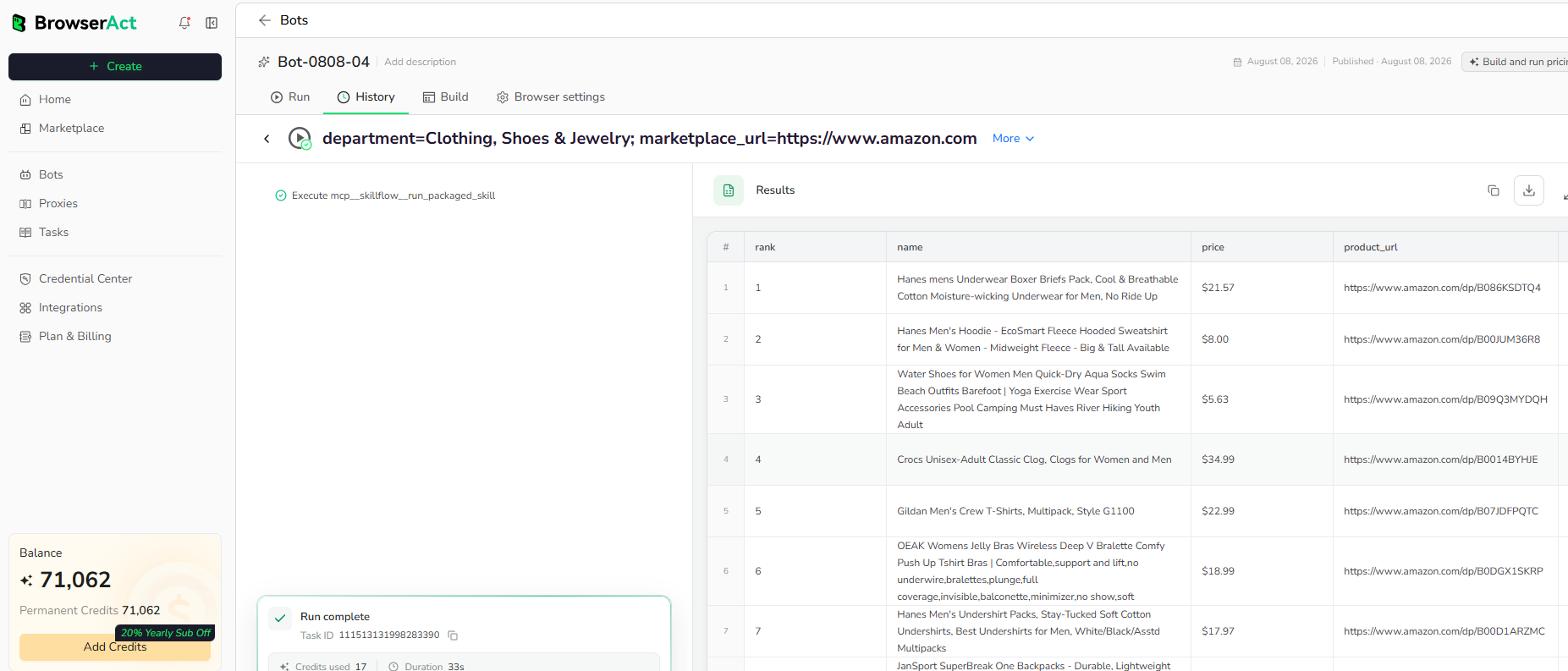
When the build is complete, run the Bot with the default inputs first. Review the structured records, source URLs, missing fields, and row count before reusing the Bot with new inputs or connecting it to another workflow.
Why Scrape Hugging Face Dataset Results?
Hugging Face dataset data helps teams discover public training and evaluation datasets, compare popularity, track dataset activity, monitor modalities and tasks, enrich AI catalogs, and route public dataset metadata into research dashboards, alerts, or agent workflows.
Who Can Use This Template?
- AI researchers comparing public datasets.
- ML engineers building dataset discovery workflows.
- Product teams monitoring AI dataset ecosystems.
- Data platform teams enriching internal catalogs.
- Automation builders routing dataset metadata into spreadsheets, databases, alerts, or agents.
How Many Results Can You Scrape?
Use count to control the number of dataset records returned. Hugging Face returns fewer records when fewer public matches are available and caps very large searches at the public API limit.
Automation and Export
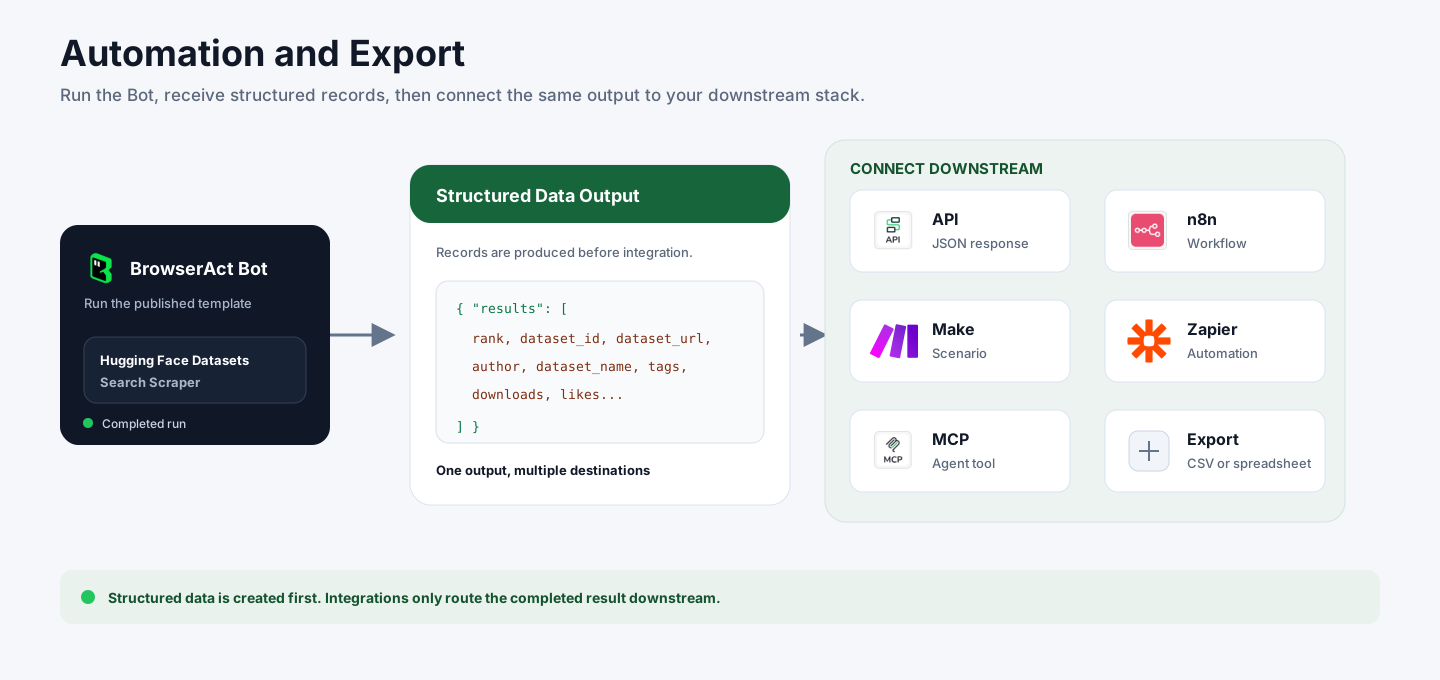
BrowserAct returns structured Hugging Face dataset records first. You can then use the output through API JSON responses, n8n workflows, Make scenarios, Zapier automations, MCP-based agent workflows configured from the Bot's Integrations tab, or manual CSV review.
Need Help?
Contact us at
Discord: Discord Community
E-mail: service@browseract.com
