

Google Social Profile Finder is a reusable BrowserAct template for collecting structured records from public Google pages. Configure the run inputs, start the Bot, and receive consistent output for research, monitoring, enrichment, or downstream automation without writing selectors or scraper code.
What Does BrowserAct Google Social Profile Finder Do?
The Bot starts from your configured inputs, opens the relevant public Google page, loads the requested records, extracts the visible fields, and returns structured results. The default example uses Mike Smith for Person Name, but the input can be changed before each run.
Key Features of Google Social Profile Finder
- Configurable public-page inputs without rebuilding the Bot.
- Structured records returned in a consistent
resultsarray. - Public, non-login extraction path.
- Reusable runs for new keywords, URLs, locations, or limits.
- Output ready for review, export, API use, or automation.
What Data Can I Extract from Google?
| Field | Description |
|---|---|
platform_name |
Publicly visible platform name value for the record, when available. |
profile_name_or_title |
Publicly visible profile name or title value for the record, when available. |
profile_url |
Direct public profile URL. |
description_snippet |
Publicly visible description snippet value for the record, when available. |
followers_count |
Publicly visible followers count value for the record, when available. |
result_position |
Publicly visible result position value for the record, when available. |
source_search_url |
Publicly visible source search url value for the record, when available. |
How to Use Google Social Profile Finder
Quick Start Guide
- Click Run task.
- Keep the default inputs for a first test or enter your own public-page values.
- Click
Run. - Review the structured records after the run completes.
- Download the result or connect it to another workflow.
Input Parameters
| Parameter | Required | Default | Description |
|---|---|---|---|
Person Name |
Yes | Mike Smith |
Controls the person name used for this run. |
Count |
Yes | 10 |
Controls the count used for this run. |
Example Output
{
  "results": [
    {
      "platform_name": "Example value",
      "profile_name_or_title": "Example value",
      "profile_url": "https://example.com/public-record",
      "description_snippet": "Example value",
      "followers_count": null,
      "result_position": "Example value",
      "source_search_url": "https://example.com/public-record"
    }
  ]
}
How Does it Work?
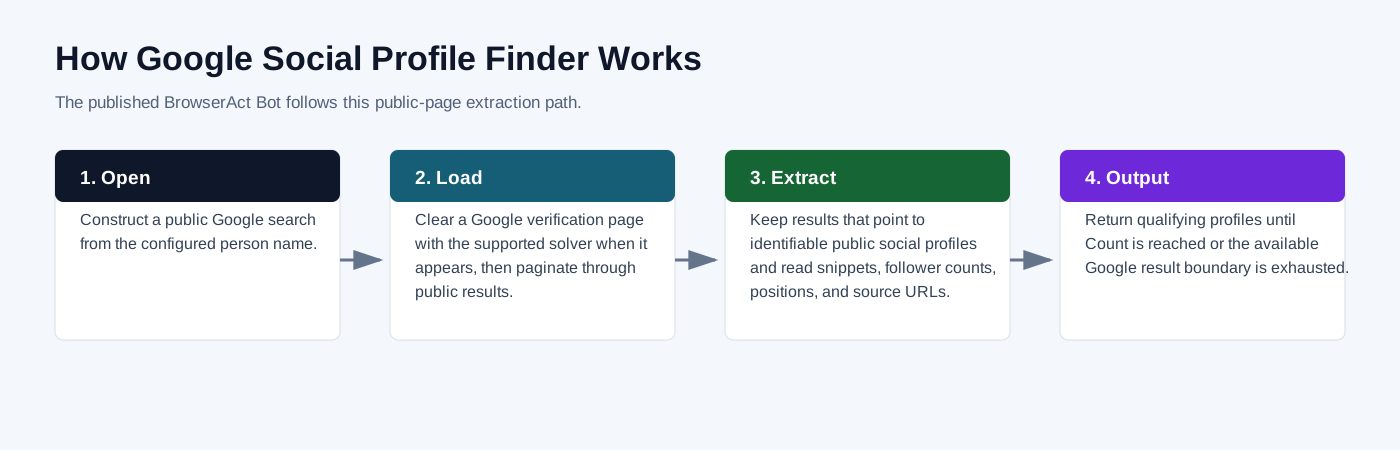
- Construct a public Google search from the configured person name.
- Clear a Google verification page with the supported solver when it appears, then paginate through public results.
- Keep results that point to identifiable public social profiles and read snippets, follower counts, positions, and source URLs.
- Return qualifying profiles until Count is reached or the available Google result boundary is exhausted.
How to Build a New Scraper Bot with Agent Built
Step 1: Describe the data you need
Open BrowserAct and start Agent Built from the Home prompt box or from Create -> Build with Agent. Describe the public website, records, inputs, fields, and result limit.
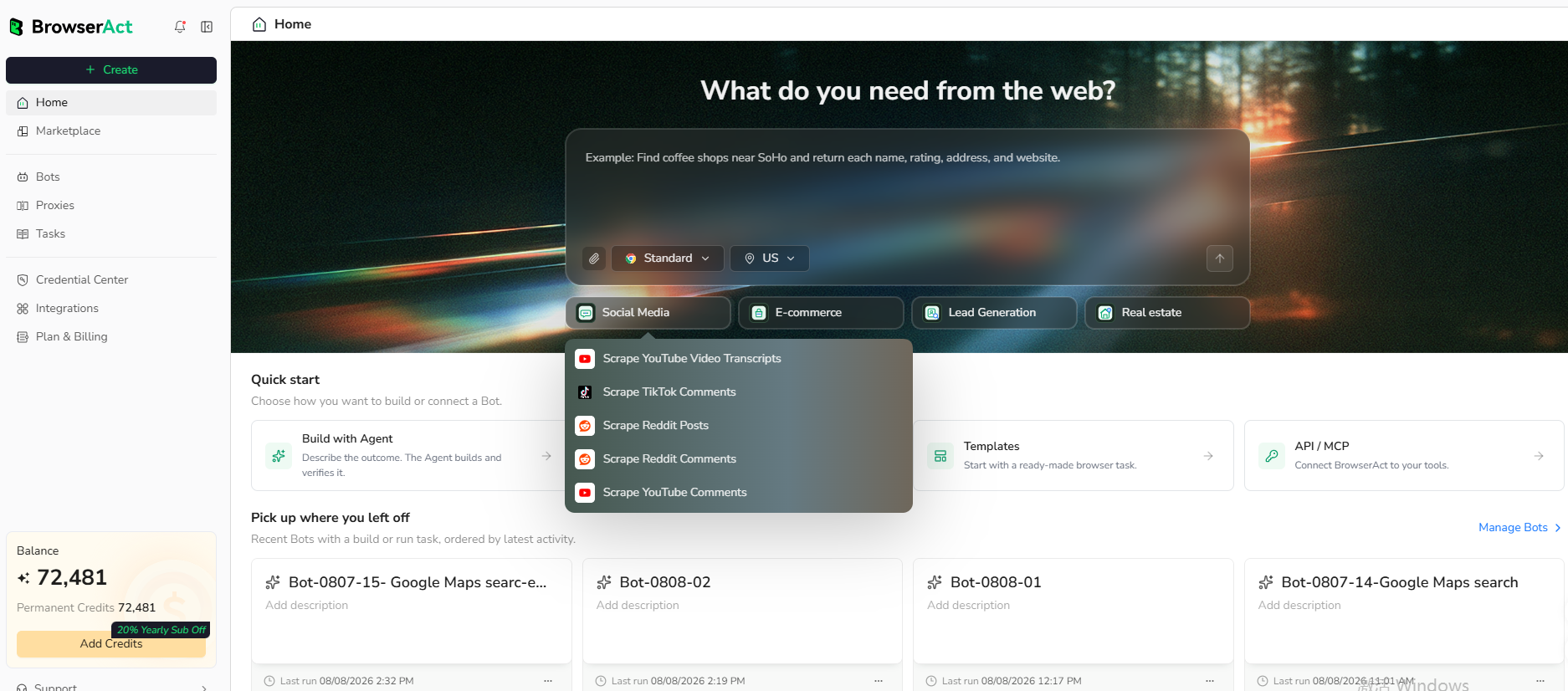
Step 2: Let BrowserAct build and test the Bot
BrowserAct explores the live website, determines the navigation and extraction path, and validates the result. Reply in the same build conversation if the Agent requests a missing public URL, field, or expected output.
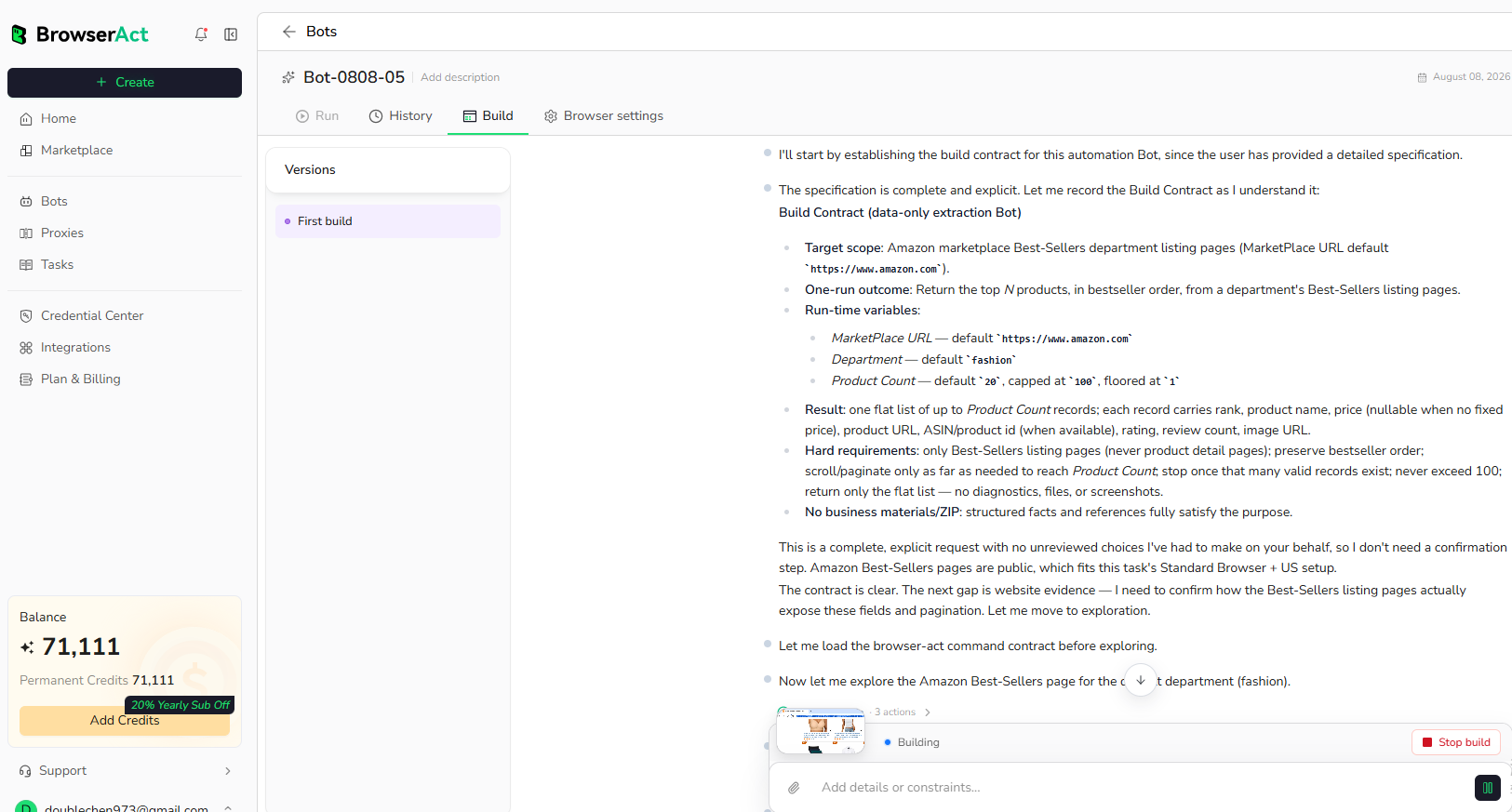
Step 3: Run the Bot and review the result
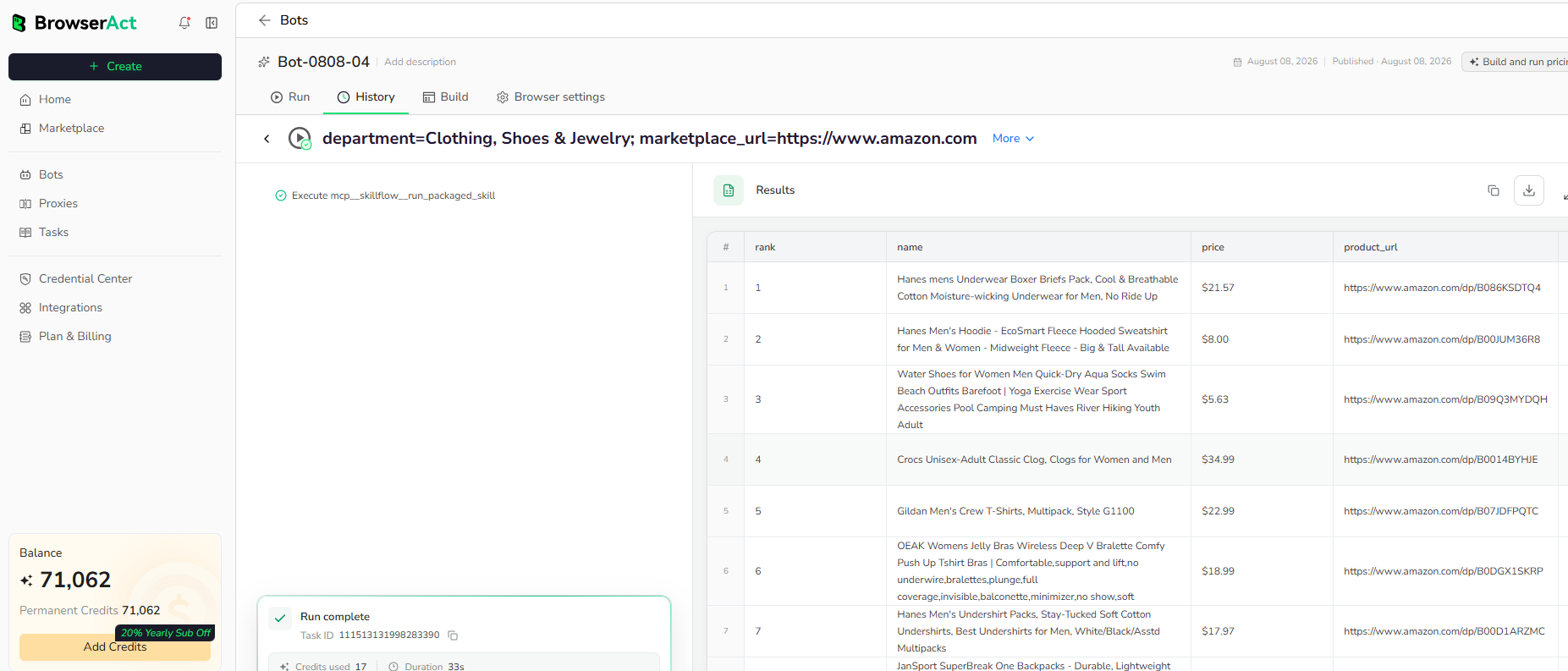
Run the completed Bot with default inputs. Check record count, source URLs, and required fields before reusing it with new inputs.
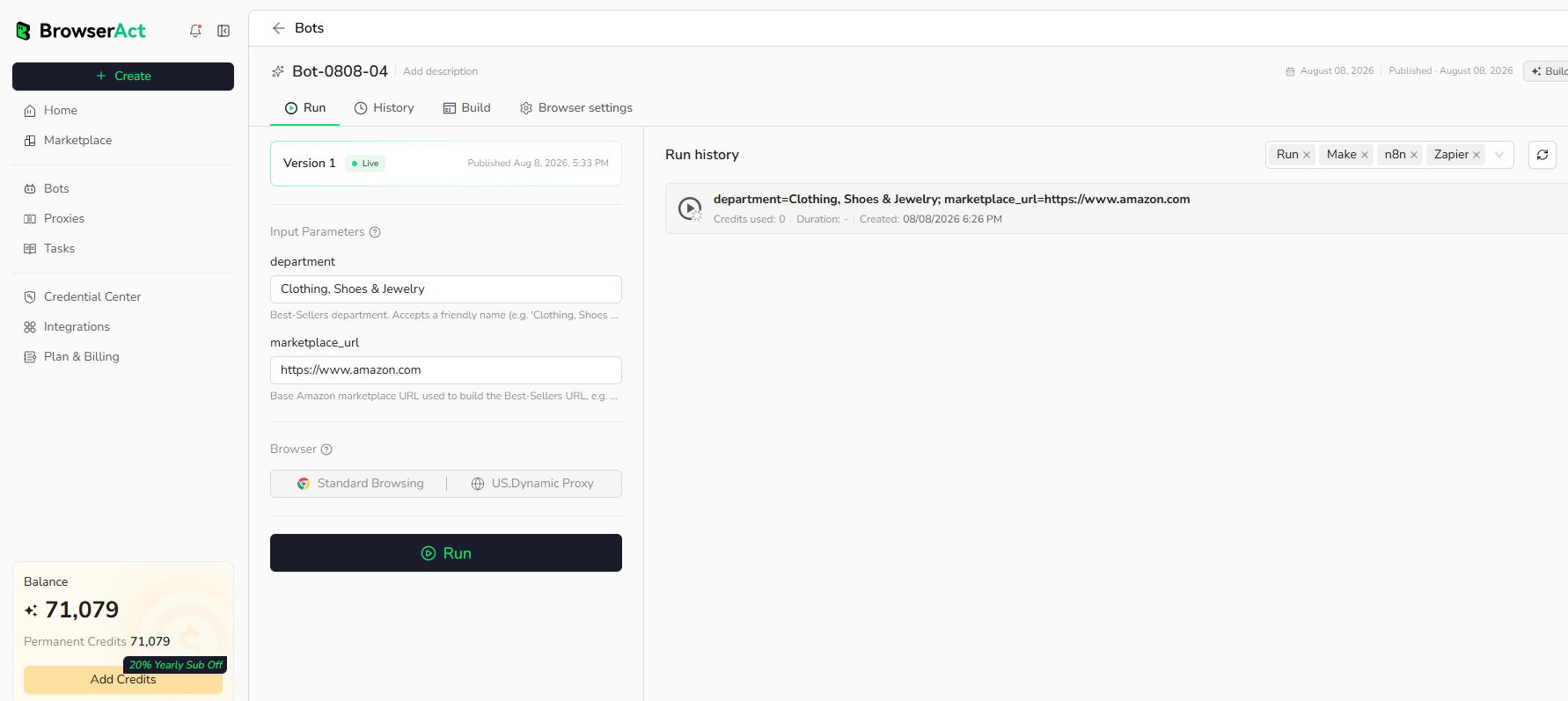
Why Use Google Social Profile Finder?
- Replace repetitive copying from public Google pages.
- Keep the same output structure across repeated runs.
- Send public records into research, reporting, enrichment, or monitoring workflows.
Who Can Use Google Social Profile Finder?
- Researchers and analysts collecting public web data.
- Marketing, sales, and operations teams preparing structured datasets.
- Automation builders connecting BrowserAct output to other tools.
- Developers who need reusable browser-collected JSON records.
Automation and Export
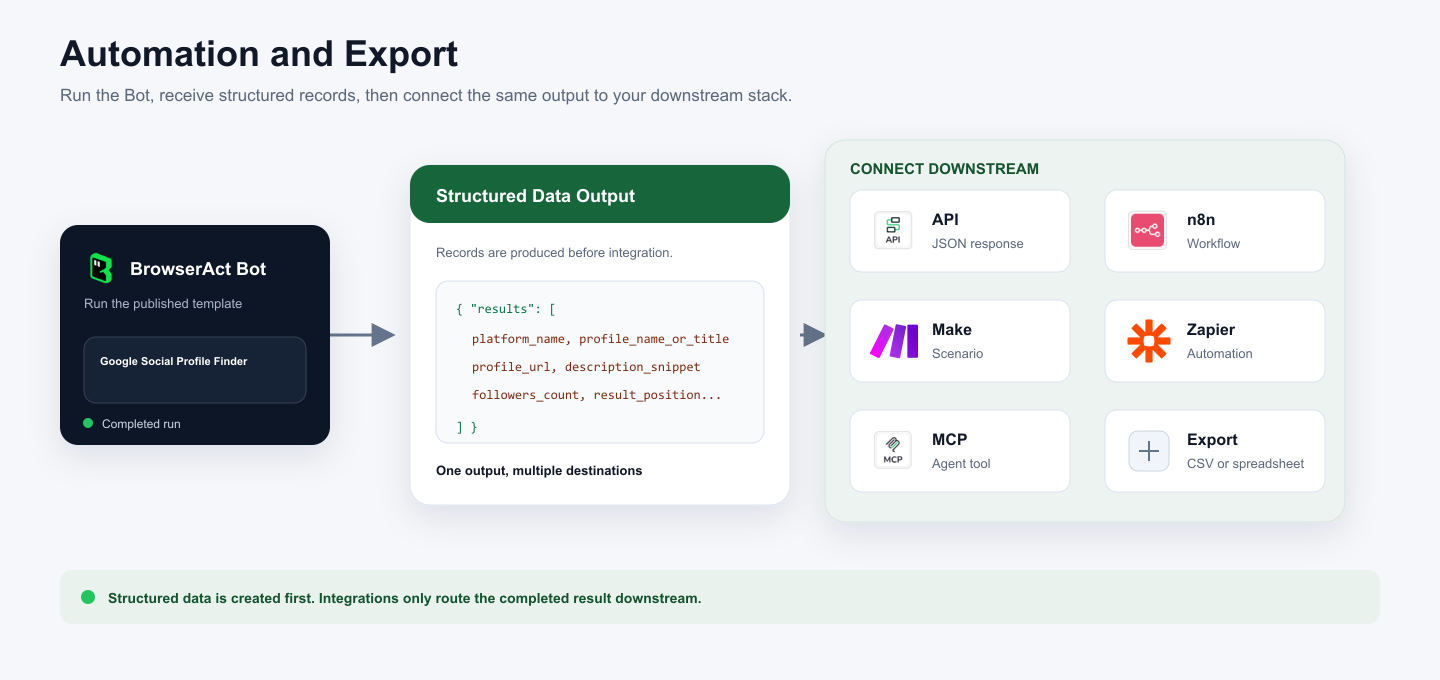
BrowserAct returns structured records first. You can then use that output through API JSON responses, n8n workflows, Make scenarios, Zapier automations, MCP-based agent workflows configured from the Bot's Integrations tab, or manual spreadsheet export.
Need Help?
Contact us at
Discord: Discord Community
E-mail: service@browseract.com
