
Google Scholar Research Scraper
Automate the collection of academic publications, citation metrics, and research profiles from leading scholarly databases.
Published by
cl
claire
August 21, 2026
Approx.Credits
185-250 Credits
Categories
BA
Data ProcessingEducationGoogle
Template ID
48639351441064273

Brief
Are you spending hours manually collecting Google Scholar search data—queries, papers, abstracts, citations, authors, and more? With millions of scholarly articles, theses, books, and patents to browse through, finding the right data or conducting research has become incredibly time-consuming for academics, researchers, scientists, and students.
BrowserAct automates the entire process. Extract structured data from Google Scholar in minutes, not hours—no coding required.
What Does BrowserAct Google Scholar Scraper Do?
Automatically extract comprehensive Google Scholar resource data with our powerful Google Scholar scraper tool. Capture search result titles, abstracts, authors, citation counts, publication years, venues, PDF links, and related articles from any Google Scholar page. Enjoy flexible filtering and output options for comprehensive market analysis—no coding required.
Our Google Scholar scraper is built for seamless integration with automation platforms like Make.com, making it ideal for ongoing monitoring and competitive intelligence tasks.
What Data Can I Extract from Google Scholar?
With BrowserAct's Google Scholar Scraper, you can pull a wide range of publicly available data for analysis. Here's a breakdown:
Google Scholar Search Results & Features
- Paper titles
- Abstracts and snippets
- Authors and affiliations
- Citation counts
- Publication years
- Venues and journals
- PDF links and sources
- Related articles and metrics
Key Features of Google Scholar Scraper
- Customizable Parameters: Adjust extraction scope to match your research needs
- Flexible Selection: Set max items for bulk extraction across multiple pages
- Comprehensive Data Capture: Extracts complete search profiles with all metadata
- Structured Output: Preserves data relationships for easy analysis
- Multi-Page Support: Compatible with search results, author pages, and citation listings
- Automation-Ready: Seamlessly integrates with Make.com and other platforms
How to Scrape Google Scholar
Quick Start Guide: How to Use Google Scholar Scraper in One Click
If you want to quickly start experiencing scraping Google Scholar, simply use our pre-built "Google Scholar Scraper" template for instant setup and start scraping Google Scholar effortlessly.
- Register Account: Create a free BrowserAct account using your email
- Configure Parameters: Fill in necessary inputs like Target_url (e.g., "https://scholar.google.com/scholar?q=example") – or use defaults to learn how to scrape Google Scholar quickly
- Start Execution: Click "Start" to run the workflow
- Download Data: Once complete, download the results file from Google Scholar scraping
How to Build a Google Scholar Scraper Workflow: Step by Step
Google Scholar Scraper workflow building with BrowserAct requires no coding skills—it's automation-ready and easy to set up. Follow these step-by-step instructions to get started.
- Determine Your Scope
Decide the number of results to extract (e.g., 50 results with complete details). Adjust parameters based on your research needs.
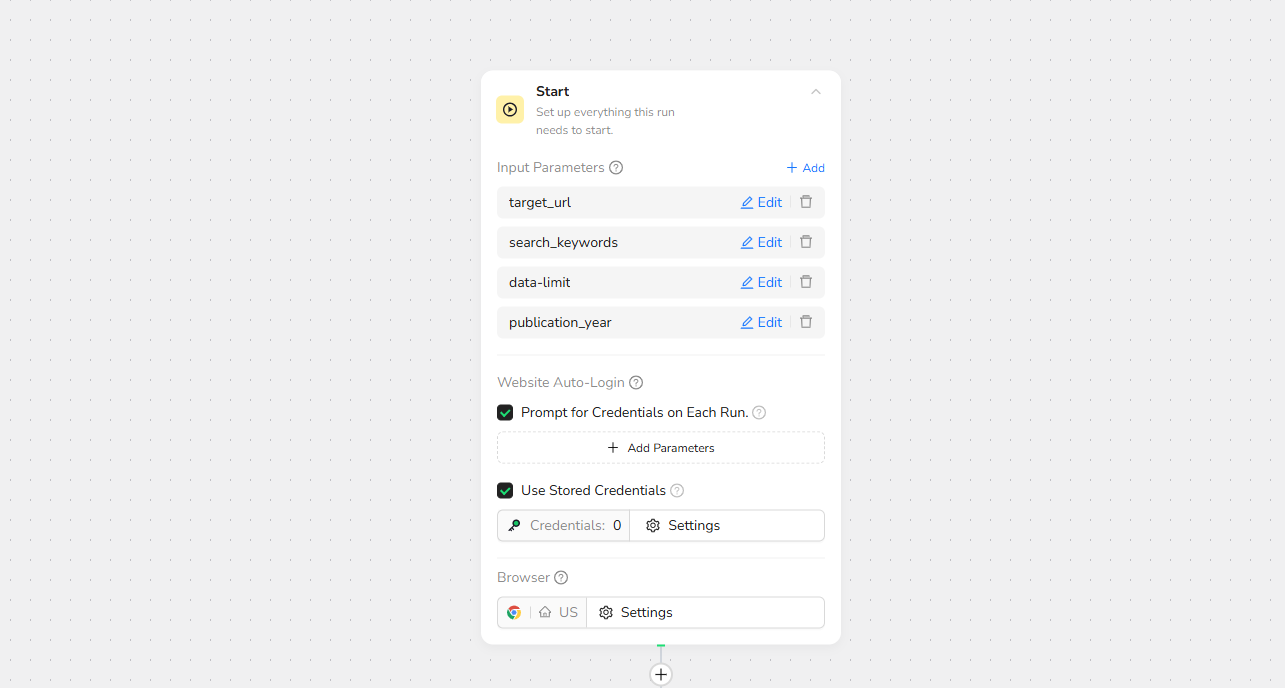
- Start Node Parameter Settings
- target_url: Enter your Google Scholar link (e.g., https://scholar.google.com/)
Note: Customize based on needs—works with search results, author pages, or citation listings.
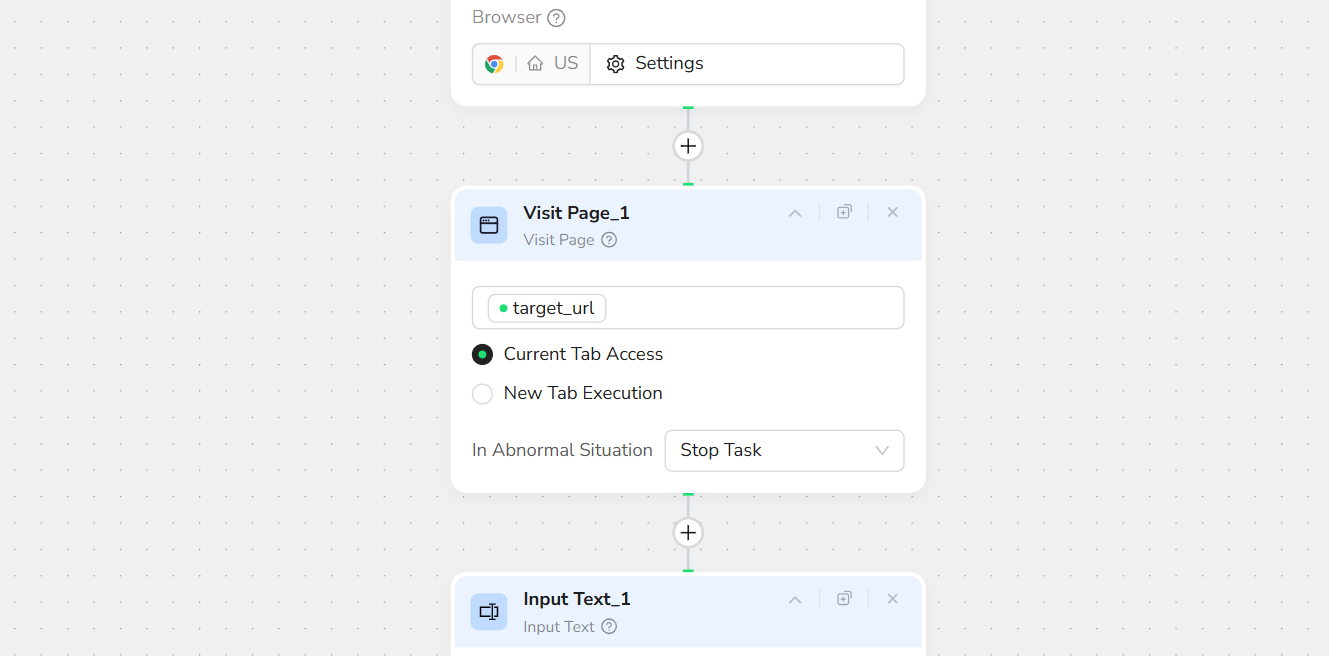
- Visit Page
In the prompt box, enter Visit / target_url – this will navigate to the target URL.
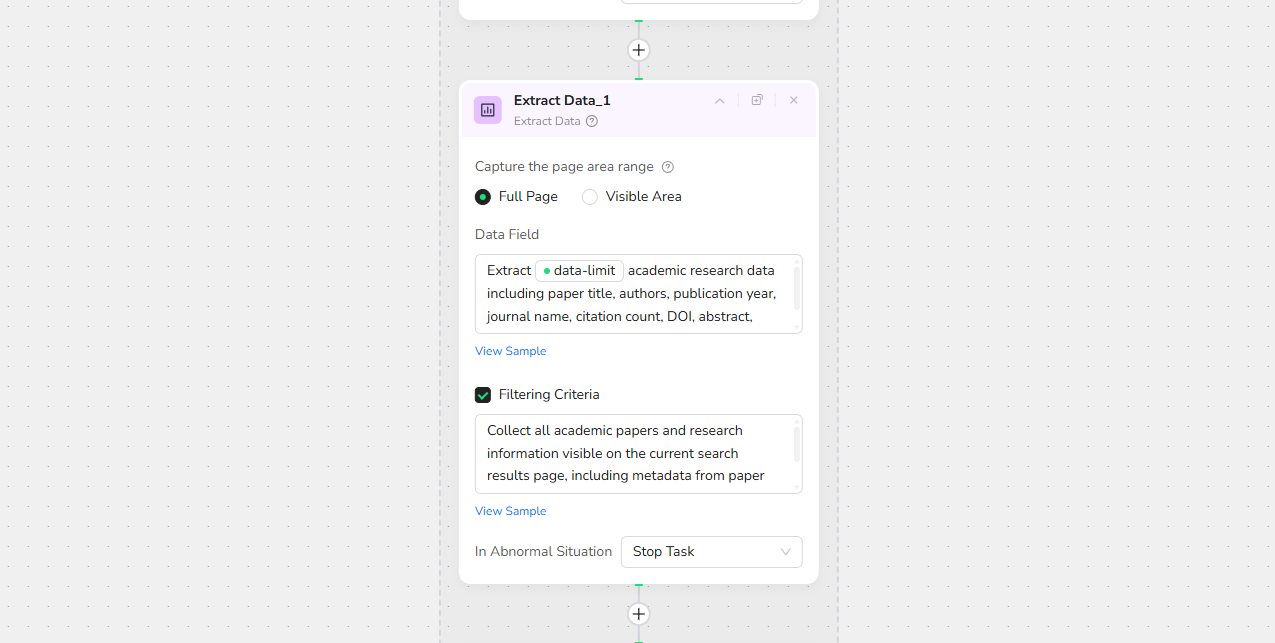
- Add Extract Data
In the prompt box, enter:
Extract /data-limit academic research data including paper title, authors, publication year, journal name, citation count, DOI, abstract, keywords, URL, and author affiliations.
Note: You can specify the exact location of the data to be collected on the page to increase the accuracy of data extraction.
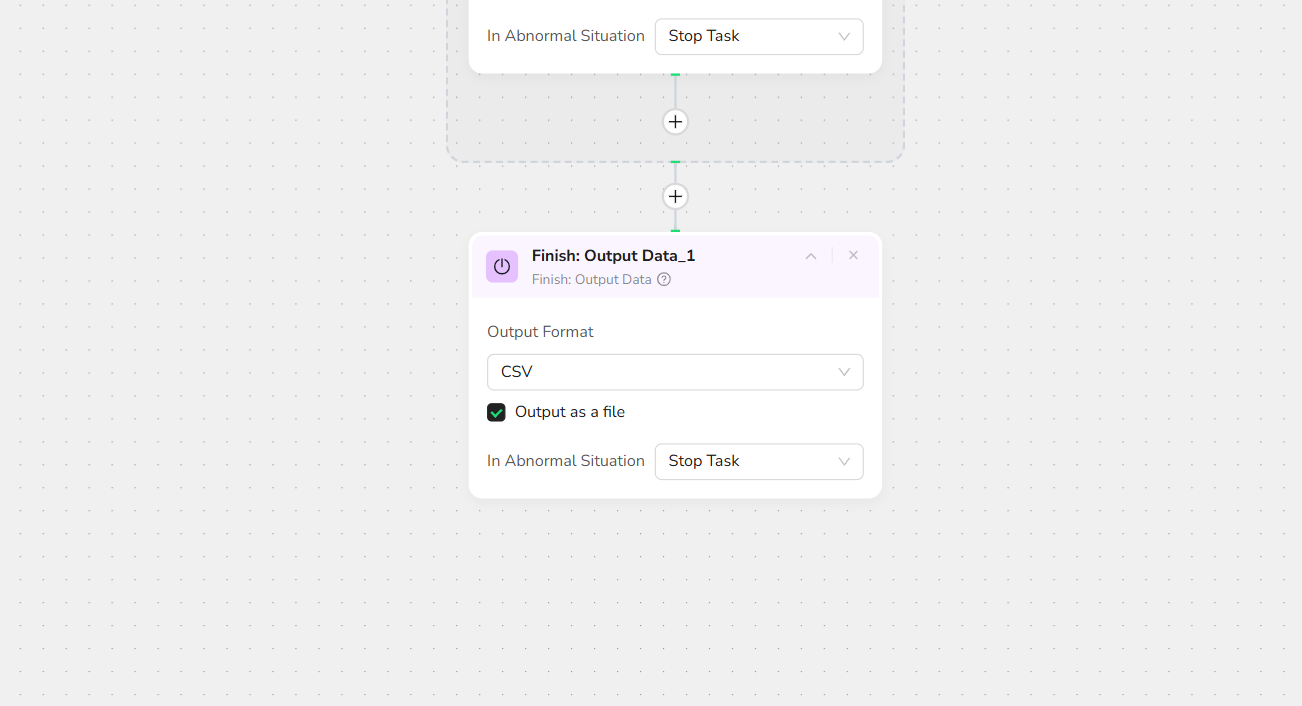
- Output Data
Export in JSON, CSV, XML, or Excel formats.
Key Benefits of Google Scholar Scraper
Google Scholar Scraper offers a range of advantages that make data extraction simple, efficient, and powerful. Here's why it's a top choice for Google Scholar web scraping:
✅ No Coding Required: Set up and run extractions effortlessly without any programming skills—perfect for beginners and pros alike
✅ Customizable and Flexible: Adjust parameters like item limits, data fields, and target URLs to tailor results to your exact needs
✅ Structured Data Output: Maintains organized data in structured formats (e.g., JSON, CSV, Excel) for easy analysis and integration
✅ Automation Integration: Seamlessly works with Make, n8n, and other platforms for scheduled, hands-off web scraping
✅ Cost-Effective: Start with free trials for small-scale tasks, scaling affordably for larger datasets while respecting Google Scholar's policies
✅ Accurate and Reliable: Handles automatic page loading, uses 'N/A' for missing data, and includes rate limit handling to ensure consistent results
These benefits make Google Scholar Scraper an efficient tool for turning raw scholarly data into actionable research insights.
Who Can Use Google Scholar Scraper?
Google Scholar Scraper is designed for anyone needing quick, reliable access to academic literature. It's ideal for a variety of users, including:
- Researchers & Scientists: Track citations and discover groundbreaking papers
- PhD Students & Academics: Conduct systematic literature reviews and gap analysis
- Professors & Lecturers: Monitor publication trends in their field
- R&D Teams & Labs: Stay ahead with the latest research and competitor publications
- Market Researchers & Analysts: Extract data for innovation tracking and patent landscapes
- Grant Writers & Policy Makers: Identify influential authors and highly cited works
- Small Universities & Startups: Conduct affordable academic research without needing advanced technical skills
- Librarians & Journal Editors: Build citation databases and assess impact
No matter your background, if you're looking to scrape Google Scholar without hassle, this tool is accessible and effective for both individuals and teams.
Use Cases for Google Scholar Scraper
Google Scholar Scraper is versatile for various real-world applications. Here are some key ways to use it for extracting and analyzing scholarly data:
📊 Literature Review: Collect titles, abstracts, and citation counts for systematic reviews
🔍 Citation Analysis: Track h-index trends and identify highly influential papers
💰 Research Funding: Find top-cited works and emerging topics for grant proposals
⭐ Impact Assessment: Analyze citation velocity and journal prestige over time
🔄 Publication Monitoring: Follow new papers from specific authors or institutions
🛠️ Reference Building: Create comprehensive bibliographies and citation networks
📈 Trend Tracking: Monitor rising keywords and research fronts in any discipline
🎯 Author Research: Study publication histories and collaboration patterns
Whether for one-off reviews or ongoing monitoring, Google Scholar Scraper helps transform academic data into valuable insights.
Make.com Integration
BrowserAct's Google Scholar Scraper is now available as a native app on Make.com—add it to your scenarios without API hassle.
✅ Automation-Ready: Integrate with Make, n8n, or others for scheduled monitoring
✅ Rate Limit Handling: Built-in delays to comply with Google Scholar policies
✅ Multi-Query Tracking: Run instances for different keywords, authors, or years
💡 Use Case Tip: Ideal for weekly citation alerts, literature monitoring, and research dashboards with complete paper metadata
🚀 Quick Start with Make.com: Search for "BrowserAct" in Make.com's app directory and add it directly—no complex setup
Ready to Transform Your Google Scholar Data Collection?
Stop wasting hours on manual searching and copying. Start scraping Google Scholar papers, citations, and trends in minutes with BrowserAct's AI-powered automation.
Try BrowserAct Free → https://www.browseract.com/
No credit card required. Get started in under 5 minutes.
Popular Use Cases:
- Researchers building systematic reviews
- PhD students tracking citation growth
- Professors monitoring field evolution
- Labs discovering breakthrough papers
- Teams automating literature updates
Start Your Free Trial → https://www.browseract.com/template?page=3
Need Help?
Contact us at:
- 📧 Discord: https://discord.com/invite/UpnCKd7GaU
- 💬 E-mail: service@browseract.com
 What can we do for you