

Crates.io Package Search Scraper is a BrowserAct Bot template for collecting structured Rust package records from public crates.io search results. Configure a keyword and result count, then run the Bot to return ranked crate metadata for developer research, package discovery, ecosystem analysis, dependency monitoring, or automation workflows.
What Does BrowserAct Crates.io Package Search Scraper Do?
This template opens crates.io search for your keyword, reads public crate result data, follows pagination when needed, and returns one structured record per Rust crate.
Key Features
- Extract public crates.io package search results without requiring a login.
- Capture rank, crate name, URL, description, latest version, total downloads, recent downloads, update time, and keyword.
- Configure base URL, keyword, and count.
- Continue through public crates.io result pages until the requested count is reached.
- Keep package metadata ready for developer dashboards, package reports, and agent workflows.
What Data Can I Extract from Crates.io?
| Field | Description |
|---|---|
rank |
Search result position. |
crate_name |
Rust crate package name. |
crate_url |
Public crates.io crate URL. |
description |
Crate description. |
latest_version |
Latest version shown by crates.io search data. |
total_downloads |
Total download count. |
recent_downloads |
Recent download count. |
updated_at |
Last update timestamp. |
keywords |
Reserved for visible keywords; crates.io search may leave this empty. |
categories |
Reserved for visible categories; crates.io search may leave this empty. |
owner |
Reserved for visible owner or publisher data; crates.io search may leave this empty. |
license |
Reserved for visible license data; crates.io search may leave this empty. |
search_keyword |
Keyword used for the run. |
How to Use Crates.io Package Search Scraper
- Click Run task.
- Enter the crates.io base URL.
- Enter a Rust package keyword, topic, or use case.
- Set how many crate records to collect.
- Run the Bot and review the structured package results.
- Reuse the Bot with another keyword or connect the output to your workflow.
Input Parameters
| Parameter | Required | Default | Description |
|---|---|---|---|
base_url |
Yes | https://crates.io |
crates.io base URL without a trailing slash. |
keyword |
Yes | web scraping |
Search keyword sent as the q query parameter. |
count |
Yes | 20 |
Maximum number of crate records to return. |
Example Output
The table below uses records preserved from the validated Bot run. Up to the first 5 records are shown, and long values are shortened in this documentation preview.
| rank | crate_name | crate_url | description | latest_version | total_downloads | recent_downloads | updated_at | keywords | categories | owner | license | search_keyword |
|---|---|---|---|---|---|---|---|---|---|---|---|---|
| 1 | web-scrape | https://crates.io/crates/web-scrape | This library aids in scraping data from the web. | 0.11.0-rc.3 | 3706 | 92 | 2026-07-28T21:38:11.326270Z | null | null | null | null | web scraping |
How Does it Work?
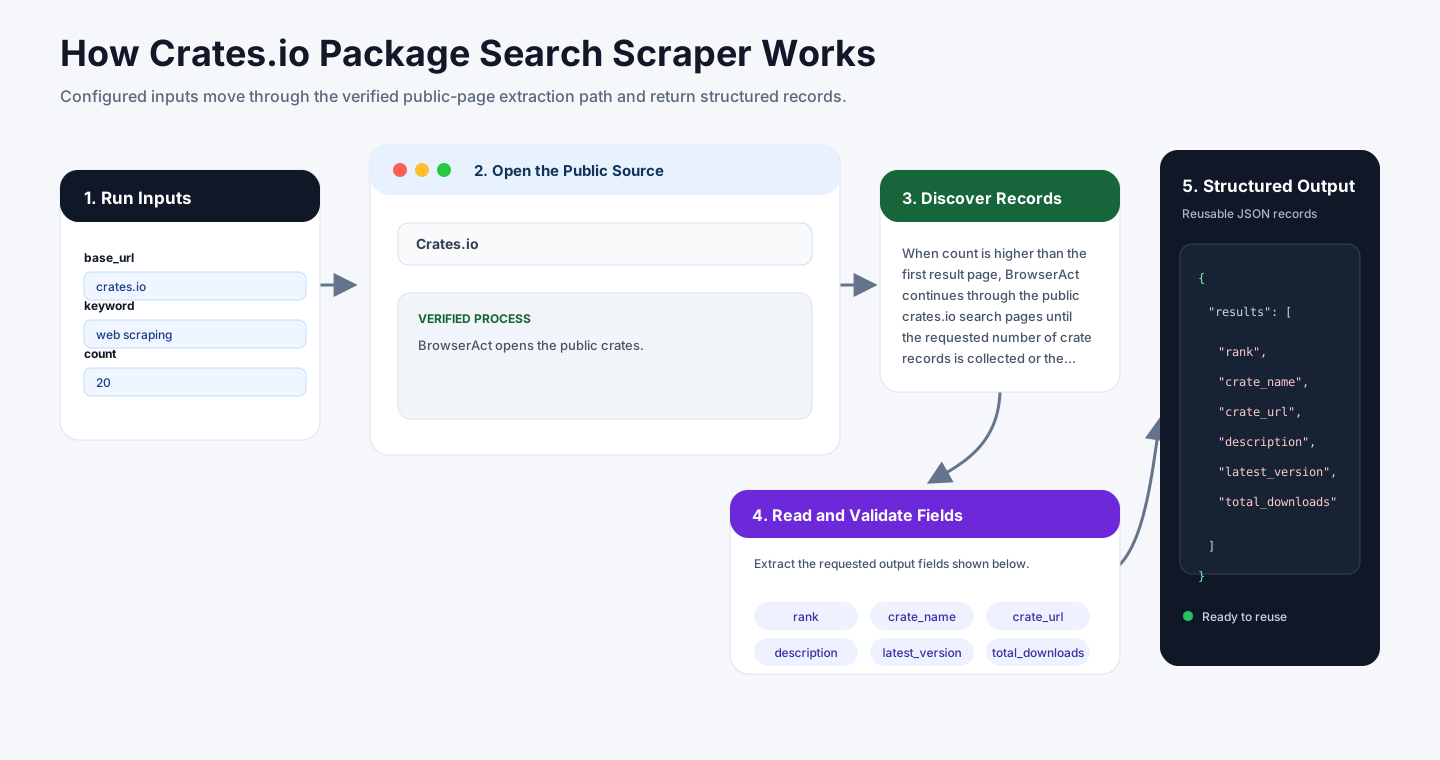
BrowserAct opens the public crates.io search page from base_url and keyword, then uses the same public search data source that powers the visible result list. Each crate record is mapped into a ranked row with crate name, URL, description, latest version, download counts, update timestamp, and search keyword.
When count is higher than the first result page, BrowserAct continues through the public crates.io search pages until the requested number of crate records is collected or the result set ends. Fields that are not exposed in search results, such as owner and license, are left empty.
How to Build a New Scraper Bot with Agent Built
Step 1: Describe the Data You Need
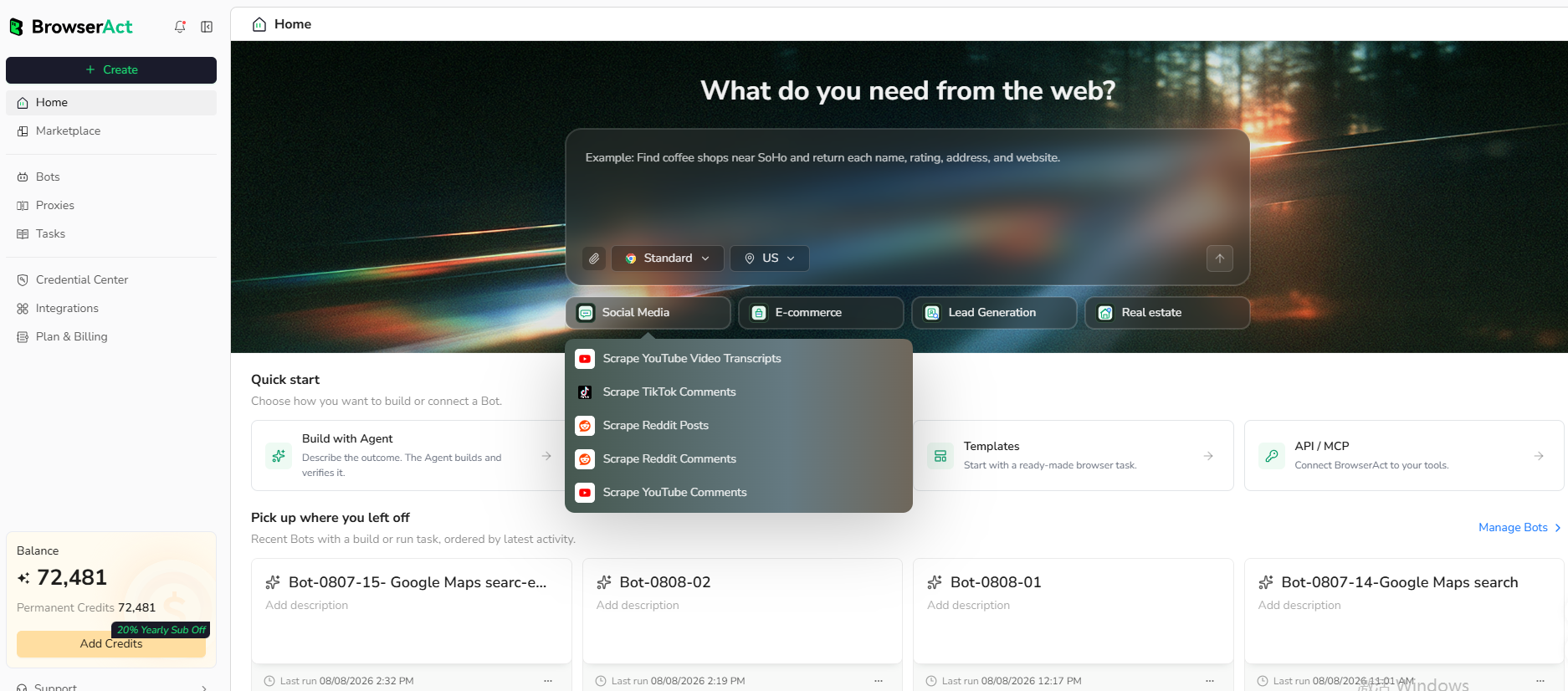
Open BrowserAct and start Agent Built from the Home prompt box or from Create -> Build with Agent. Paste a clear request that includes the website, the records to collect, the filters or search conditions, the fields to return, the result limit, and the inputs you want to reuse later.
Step 2: Let BrowserAct Build and Test the Bot
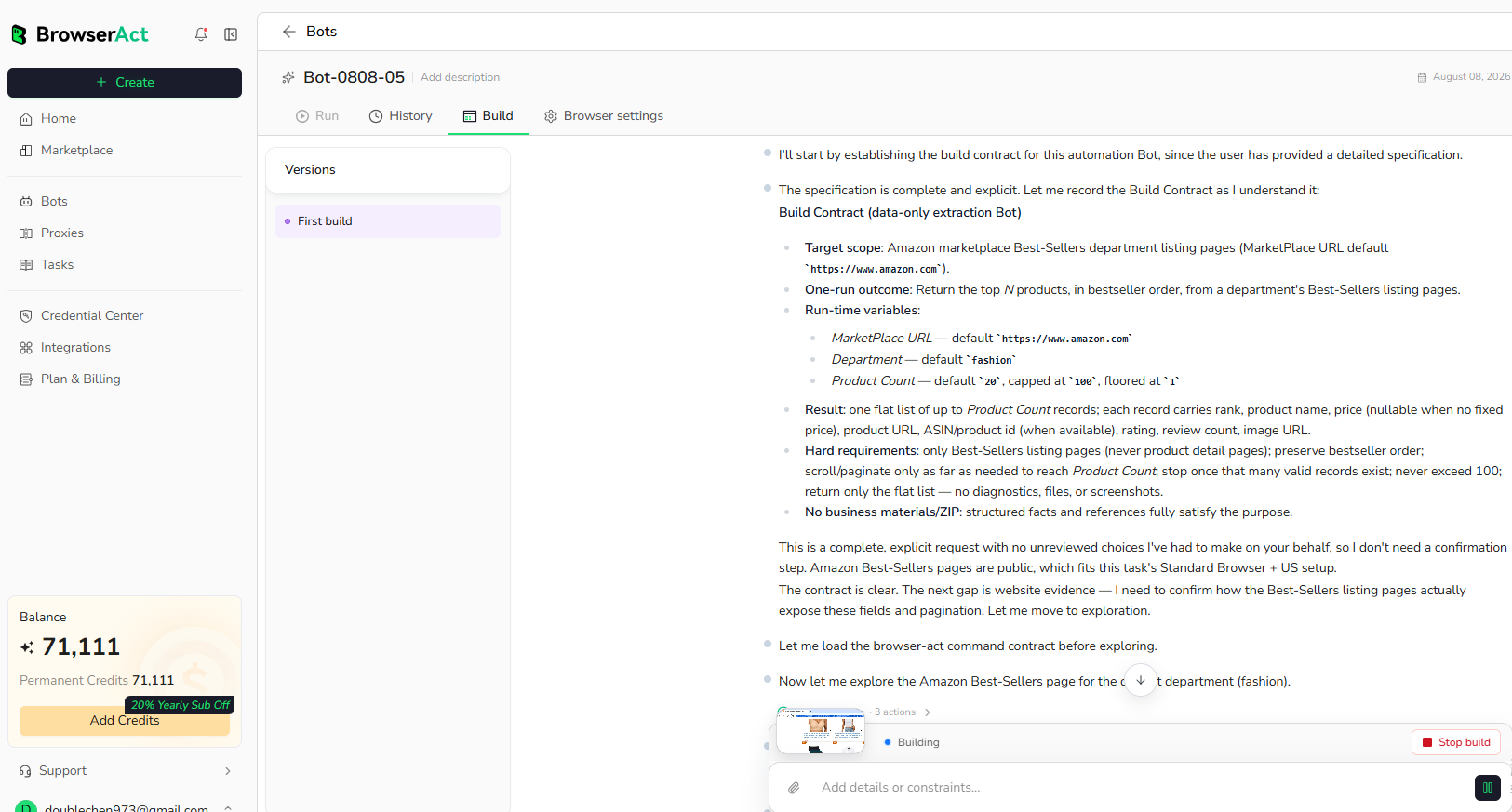
BrowserAct explores the live website, works out the navigation and extraction path, and validates the result. If BrowserAct asks for clarification, reply in the same build conversation with the missing URL, condition, field, example, or expected output.
Step 3: Run the Bot and Review the Result
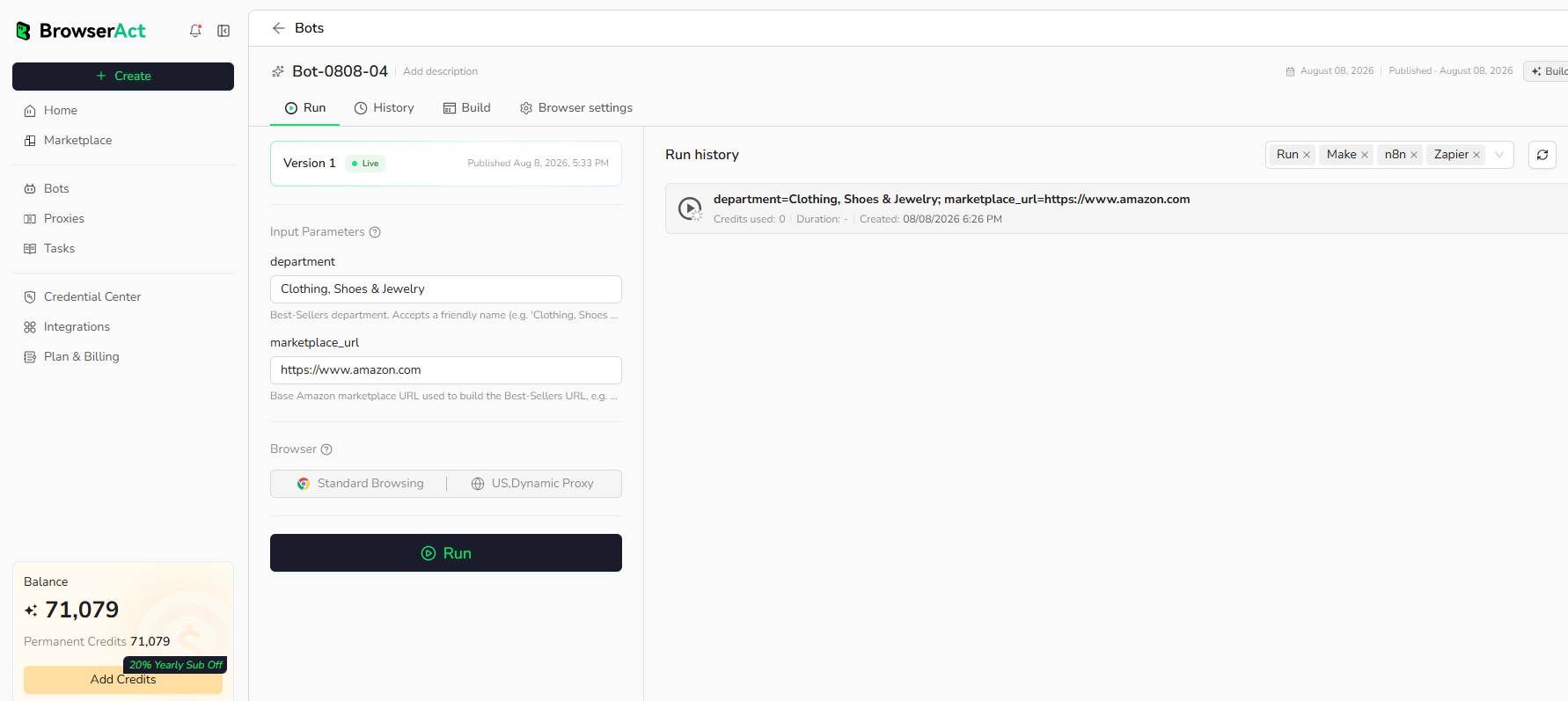
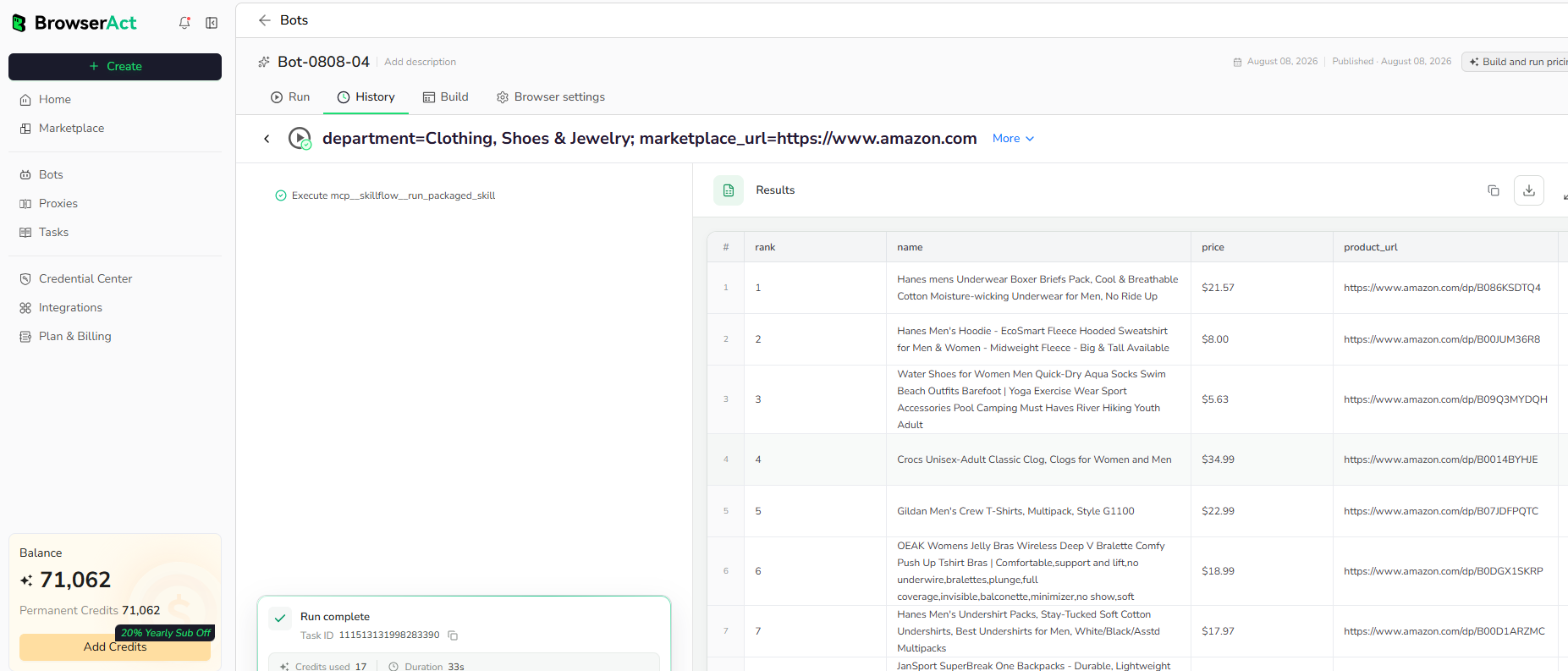
When the build is complete, run the Bot with the default inputs first. Review the structured records, source URLs, missing fields, and row count before reusing the Bot with new inputs or connecting it to another workflow.
Why Scrape Crates.io Package Search Results?
Crates.io search data helps teams discover Rust packages, compare package popularity, monitor dependency ecosystems, collect package metadata, and route developer-tool records into dashboards, reports, databases, or agents.
Who Can Use This Template?
- Rust developers researching packages and alternatives.
- Developer relations teams tracking ecosystem activity.
- Security and platform teams monitoring dependencies.
- Content teams building package roundups or comparisons.
- Automation builders routing package metadata into spreadsheets, databases, alerts, or agents.
How Many Results Can You Scrape?
Use count to control the number of crate records returned. Higher counts require moving through more public search result pages and may take longer.
Automation and Export
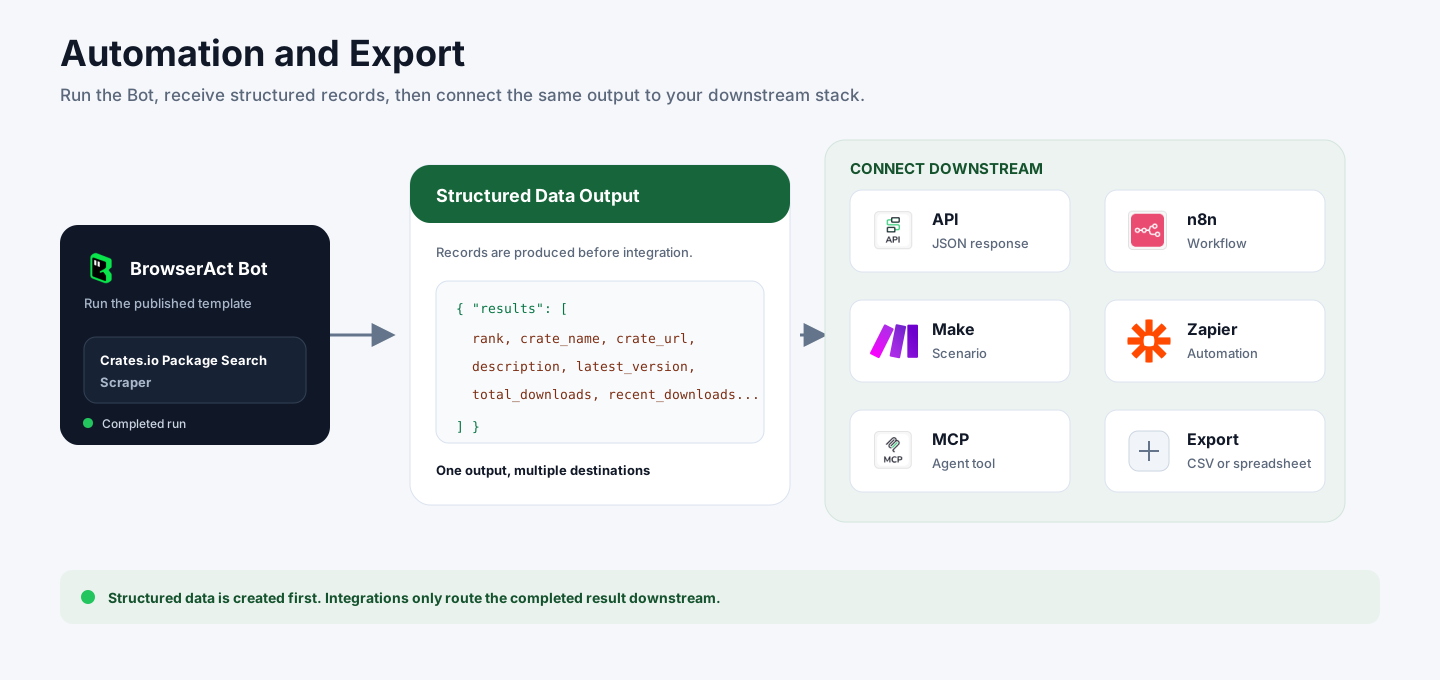
BrowserAct returns structured crates.io package records first. You can then use the output through API JSON responses, n8n workflows, Make scenarios, Zapier automations, MCP-based agent workflows configured from the Bot's Integrations tab, or manual CSV review.
Need Help?
Contact us at
Discord: Discord Community
E-mail: service@browseract.com
